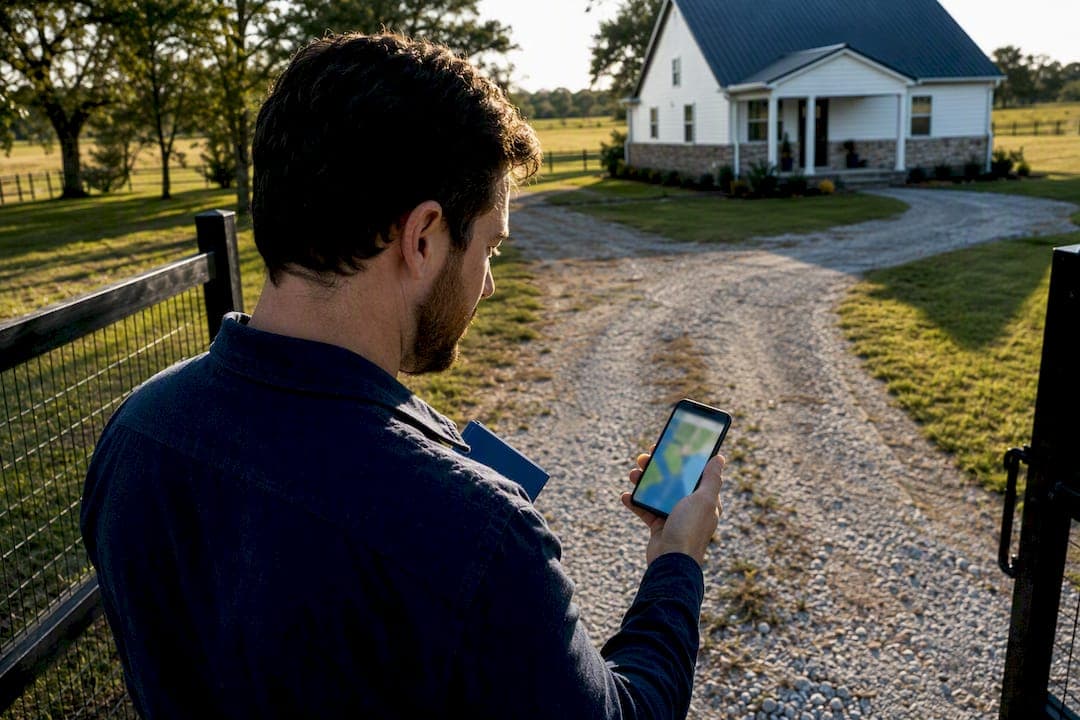
Yes, USDA loans are active across most of Florida outside the state's dense urban cores, and two federal paths apply here: the Section 502 Guaranteed program for most buyers and the Section 502 Direct program for very-low-income households. Before you go further, run three checks: confirm the property on the USDA eligibility map, verify your county's income limit, and get prequalified with an approved lender.
TL;DR:
- USDA loan eligibility in Florida depends on county-specific income limits, property location within designated rural or suburban areas, and approval by experienced lenders.
- The Section 502 Guaranteed loan provides 100% financing through approved private lenders, while the Direct program offers payment assistance for very-low-income households.
- Confirm property eligibility by checking the USDA map and verify household income limits before starting house hunting, to avoid wasting time on ineligible listings.
- Common delays in Florida include appraisal issues, flood insurance requirements, and condo approval, making early lender communication crucial.
- Local USDA Area Offices can provide region-specific assistance, especially for repairs, and working with lenders experienced in USDA loans can significantly reduce closing times.
Table of Contents
- What USDA Home Loan Programs Are Available in Florida?
- Who Qualifies for a USDA Loan in Florida?
- Are USDA Loans Worth It for Florida Buyers?
- How Do You Check USDA Eligibility for a Florida Property?
- What's the USDA Loan Application Process and Timeline in Florida?
- Where Do Florida Buyers Find Local USDA Resources?
- Why Local Guidance Matters More Than the Map Alone
- Get Help Applying for a USDA Loan in Florida
- Official USDA Resources for Florida Applicants
- Sources
What USDA Home Loan Programs Are Available in Florida?
Florida buyers have three federal programs to choose from, and picking the right one depends mostly on income and what the money needs to cover.
The Section 502 Guaranteed Loan Program offers 100% financing as a fixed-rate mortgage, with USDA providing a loan note guarantee to approved lenders. You still apply through an approved private lender, not directly through USDA, since the agency sets the guidelines while lenders handle underwriting.
The Section 502 Direct Loan Program is designed for low and very-low-income applicants and includes payment assistance that can reduce effective interest rates, with longer loan terms available for the lowest-income borrowers. Florida RD Area Offices administer these directly rather than routing them through a bank.
Here's how the three programs break down:
- Guaranteed loans: 100% financing, moderate income eligibility, approved-lender origination
- Direct loans: payment assistance, very-low to low income eligibility, RD office administration
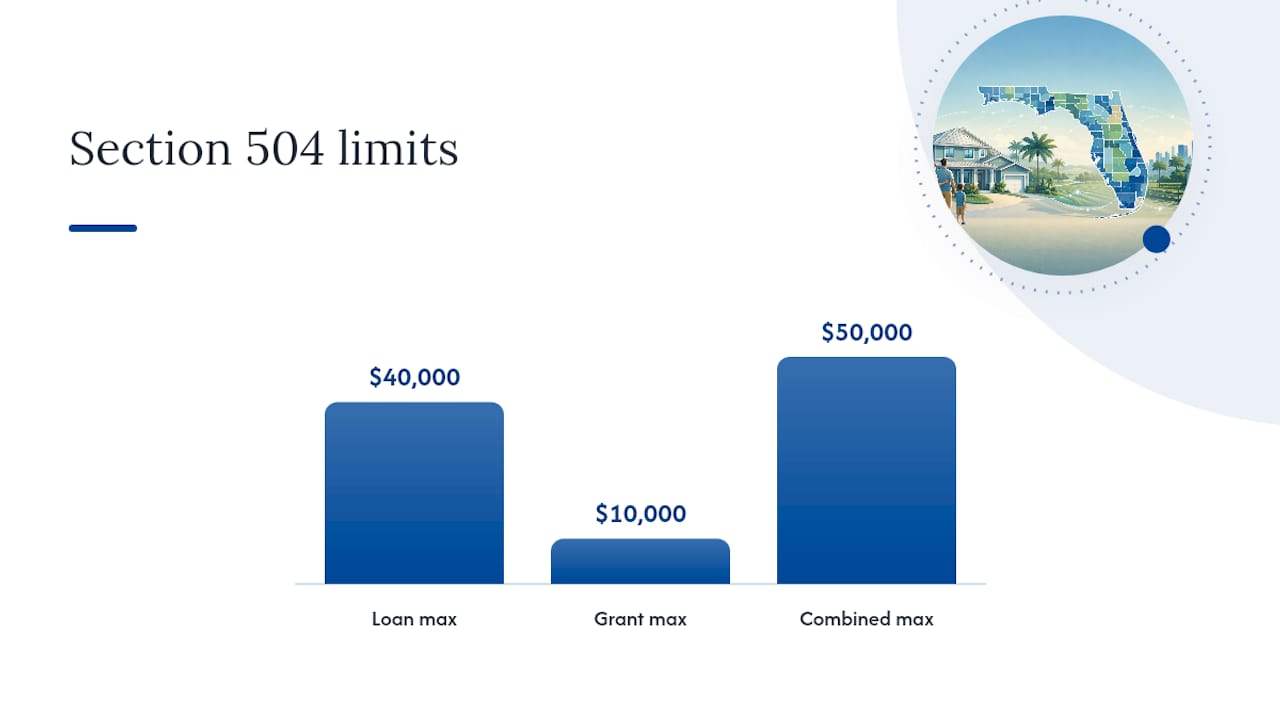
- Section 504 repair loans/grants: up to $40,000 in loans and $10,000 in grants for homeowners over 62 removing safety hazards
If your income sits comfortably under your county's moderate limit and you're buying (not repairing), start with Guaranteed. If your income is closer to the very-low-income bracket, Direct deserves a serious look.
Who Qualifies for a USDA Loan in Florida?
Eligibility comes down to five factors, and most disqualifications trace back to just one of them: income exceeding the county cap.
Income limits are county-specific and adjusted for household size, so a family of four in rural Levy County has a different ceiling than one in Suwannee County. You need to check the current limits for your specific county before assuming you qualify or don't.
Quick fact: USDA income limits are calculated against area median income and shift with household size, meaning a five-person household often qualifies at a meaningfully higher income than a two-person household in the same county.
Beyond income, lenders and USDA review:
- Citizenship status: U.S. citizens and eligible noncitizens qualify; check current noncitizen eligibility categories with your lender
- Credit and debt: most approved lenders look for a credit score around 640 and reasonable debt-to-income ratios, though USDA itself sets no hard minimum
- Primary residence requirement: the home must be your primary residence, not a rental or investment property
- Property location: it must sit inside a USDA-designated eligible area, which covers surprising amounts of suburban Florida
Your eligibility result typically falls into one of three buckets: eligible, conditionally eligible pending documentation, or ineligible due to location or income. A conditional result usually means your lender needs pay stubs, tax returns, or an updated household count before confirming your file.
Are USDA Loans Worth It for Florida Buyers?
USDA loans solve a real problem for buyers who don't have a large down payment saved, but they're not universally the best fit.
- The upside: Guaranteed loans require no down payment at all, rates are typically competitive with conventional financing, and Section 504 gives older homeowners a low-cost repair option most other programs don't touch.
- The trade-offs: income caps exclude higher earners, the property has to sit in an eligible rural or suburban zone, and you'll pay an upfront guarantee fee plus an annual fee built into your payment.
- Florida-specific friction: condo projects need separate approval, and flood or windstorm insurance requirements in coastal and inland flood zones can add cost and paperwork lenders in other states rarely deal with.
Pro Tip: If you're eyeing a property near a flood zone boundary, ask your lender to pull flood zone documentation before you write an offer. Reworking insurance requirements after contract can add weeks to closing.
If you need an investment property or the home you want sits inside an ineligible metro boundary, a conventional or non-conventional loan is worth comparing instead.
How Do You Check USDA Eligibility for a Florida Property?
Confirming eligibility takes ten minutes if you know where to look, and skipping this step is the single most common reason Florida buyers waste time on ineligible listings.
Go to the USDA Income and Property Eligibility Site and enter the property address directly. The tool returns an eligible or ineligible result instantly, based on current USDA rural area boundaries, which get redrawn periodically as Florida's suburbs expand.
- Screenshot the eligibility result and save it with the property address and date
- Cross-reference your county's income limit against your household's gross annual income
- Note which USDA Area Office serves that county before you contact a lender
- If the result seems wrong for a property you know is rural, call the local RD Area Office directly rather than assuming the map is outdated
What's the USDA Loan Application Process and Timeline in Florida?
The application sequence is straightforward once you know the order of operations, though Florida-specific issues can stretch the timeline if you're not prepared.
- Check property and income eligibility using the tools above before you start house hunting seriously.
- Get prequalified with an approved lender experienced in USDA originations. Since USDA doesn't endorse specific lenders, the lender you pick determines how smoothly underwriting goes.
- Sign a purchase contract, then your lender compiles income verification, asset statements, ID, and required RD forms for submission.
- Lender submits the file to USDA for the guarantee (Guaranteed loans) or to the RD office for direct processing (Direct loans).
- Appraisal, insurance review, and RD approval happen in parallel, then you move to closing.
Guaranteed loans typically close in a timeframe generally comparable to conventional financing, though exact timing can vary with circumstances. Direct loans, since they route through RD staff rather than private underwriting, can take longer depending on regional office workload.
Pro Tip: Appraisal issues, missing flood insurance documentation, and condo approval delays are the three most common Florida-specific holdups. Ask your lender to flag these during prequalification, not after you're under contract. An experienced lender who has closed USDA loans before typically spots these problems weeks earlier than one working a first file.
Where Do Florida Buyers Find Local USDA Resources?
Florida is divided among several RD Area Offices, each covering a distinct set of counties, and reaching the correct one saves real time when you have questions the eligibility map can't answer.
Offices are located in cities including Crestview, Marianna, Lake City, Ocala, Champions Gate, and Royal Palm Beach, with each assigned to specific counties. If you're pursuing a Section 504 repair loan, contacting your Area Office for informal prequalification before gathering paperwork is worth doing. Staff can tell you quickly whether your planned repair (a roof replacement, a failing septic system, accessibility modifications) fits the program's health-and-safety criteria.
- Section 504 loans max out at $40,000, with grants capped at $10,000 for homeowners 62 and older
- Loans typically carry a fixed 1% rate over 20 years
- Grants must be repaid if the home sells within three years of receiving funds
- Loan and grant funds can be combined up to $50,000 total when a homeowner qualifies for both
If you're buying into a planned community, it's also worth reviewing HOA questionnaire requirements early, since HOA documentation can affect closing timelines on top of USDA processing.
Why Local Guidance Matters More Than the Map Alone
The eligibility map tells you whether a property qualifies. It doesn't tell you whether the lender across the table has actually closed a USDA file before, and that gap is where I see most Florida buyers lose weeks they didn't need to lose.
USDA's own structure puts real weight on lender experience. Because approved lenders handle origination and underwriting for Guaranteed loans, two borrowers with identical income and identical eligible properties can have completely different closing timelines depending on who's processing their file. A lender who's closed a dozen USDA loans in Levy or Marion County knows the appraisal quirks, the insurance triggers, and which documentation RD reviewers flag first. A lender who's closed one knows none of that, and you find out the hard way, usually a week before your closing date.
My honest read: USDA loans are underused in Florida not because buyers don't qualify, but because they assume a rural program can't apply to a suburban address twenty minutes outside Tampa or Ocala. Check the map before you rule it out.
— David
Get Help Applying for a USDA Loan in Florida
Reading eligibility maps and county income tables is one thing. Getting a lender to move your file efficiently through USDA underwriting is another.
Mortgage brokers can assist Florida homebuyers with eligibility review, lender matching, document preparation, and closing support for USDA files, alongside the full range of residential financing options when USDA isn't the right fit. If your household income is close to a county limit or your target property sits near an eligibility boundary, that's exactly the kind of judgment call worth a second set of eyes before you commit to an offer. Run your numbers through the mortgage calculator to see what a USDA payment could look like, then reach out through Lending Bankers' mortgage services page to request a free eligibility review before you write a purchase offer.
Official USDA Resources for Florida Applicants
Verify every claim in this guide directly with USDA before you apply. Start with the property and income eligibility tool to check a specific address, then review the Guaranteed Loan Program page for lender-based financing details.
For very-low-income applicants, the Direct Home Loans page for Florida lists Area Office contacts by county. Homeowners needing repairs should review the Section 504 Repair Loans and Grants page for current caps and terms before contacting a local office.
Sources
- Single Family Housing Guaranteed Loan Program | Rural Development
- USDA Income and Property Eligibility Site