
A rate-and-term refinance replaces your current mortgage with a new loan that changes your interest rate, your loan length, or both, without putting cash in your pocket. The decision comes down to one calculation: divide your closing costs by your monthly savings to find your breakeven point, then ask whether you will stay in the home past that date.
TL;DR:
- Refinancing costs typically range from 2% to 5% of the loan amount, with breakeven periods depending on the monthly savings achieved.
- A 0.5% to 1.0% interest rate reduction can be worthwhile if your expected stay exceeds the breakeven timeline.
- Borrowers should compare APRs across multiple lenders rather than just headline rates to account for fees and closing costs.
- Running personalized breakeven calculations before applying helps determine if refinancing will truly save money in your specific situation.
Table of Contents
- How Does a Rate-and-Term Refinance Work?
- What Are the Benefits of a Rate and Term Refinance?
- How Much Do Refinance Closing Costs Actually Run?
- Do You Qualify for a Rate and Term Refinance?
- How Long Does the Refinance Process Take?
- Rate-and-Term vs. Cash-Out Refinance vs. Recasting
- When Does Refinancing Actually Pay Off?
- What Lenders Wish More Borrowers Knew
- Publisher's Take: What to Do Next
- Get a Personalized Refinance Analysis
- Where to Verify Rates and Run the Numbers
- Sources
How Does a Rate-and-Term Refinance Work?
The new loan pays off the old one in full, and your outstanding principal balance typically carries over unchanged. What changes is the paperwork wrapped around that balance: a new interest rate, a new term length, or a new loan type entirely. You are not borrowing more money against your equity, which is exactly why this is often called a no-cash-out refinance.
Once the new loan closes, amortization restarts from day one. Early payments on any mortgage lean heavily toward interest, so refinancing late into a loan term can quietly reset that balance in the lender's favor unless you shorten the term to compensate.
With a rate-and-term refinance, you generally have three levers to pull:
- Lower your interest rate while keeping roughly the same term
- Shorten or lengthen the term to change your payoff timeline
- Switch loan types, such as moving from an adjustable-rate mortgage to a fixed rate
Here's where a lot of homeowners get tripped up: the advertised interest rate is not what you actually pay. APR bundles in lender fees, points, and other closing costs, so two loans with identical rates can have very different APRs. Always compare offers by APR, not the headline rate.
What Are the Benefits of a Rate and Term Refinance?
The upside depends entirely on which lever you pull. A lower rate at the same term cuts your monthly payment and your total interest simultaneously, which is the cleanest win available. Shortening your term does something different: your payment may rise, but you build equity faster and cut years of interest off the back end of the loan.
Lengthening the term works in reverse. It lowers your monthly obligation but stretches interest payments over more years, often erasing much of the savings a lower rate would have delivered. Financial guidance consistently points toward evaluating total-interest savings, not just the monthly number, before committing to a longer payoff window.
Because no cash changes hands, rate-and-term refinances typically qualify for better pricing than cash-out refinances, since lenders view them as lower risk.
- Decide whether your goal is a lower payment, faster payoff, or a different loan structure.
- Model both the monthly savings and the lifetime interest change before applying.
- Weigh that against the closing costs and the appraisal requirement you'll need to clear.
Pro Tip: If you're torn between a lower payment and a shorter term, run both scenarios through a mortgage calculator side by side. The gap in lifetime interest is often bigger than people expect.
How Much Do Refinance Closing Costs Actually Run?
Closing costs on a refinance typically land between 2% and 5% of the loan amount, covering the appraisal, title work, origination fees, and lender charges. Some lenders offer no-closing-cost refinances, but that convenience usually comes from a higher interest rate or fees rolled into the loan balance rather than actually disappearing.
The breakeven formula is simple: closing costs divided by monthly savings equals the number of months before the refinance pays for itself.
- $6,000 in closing costs ÷ $150 in monthly savings = 40 months to break even
- Stay in the home fewer than 40 months, and the refinance likely costs you money
- Stay longer, and every month past breakeven is savings in your pocket
The old 2% rule is outdated. Even a 0.5% to 1.0% rate drop can be worth pursuing depending on your closing costs and how long you plan to stay put.
Always compare the APR and the Loan Estimate from each lender side by side, since the sticker rate alone hides the fees that determine your real breakeven timeline. Comparing offers from several Miami lenders at once tends to surface the true cost differences fastest.
Do You Qualify for a Rate and Term Refinance?
Most lenders want a credit score in the mid 600s or higher for conventional refinancing, though the best rates go to borrowers well above that floor. You'll also need enough equity to keep your loan-to-value ratio at a level the lender is comfortable with, typically below 80% for the most favorable pricing.
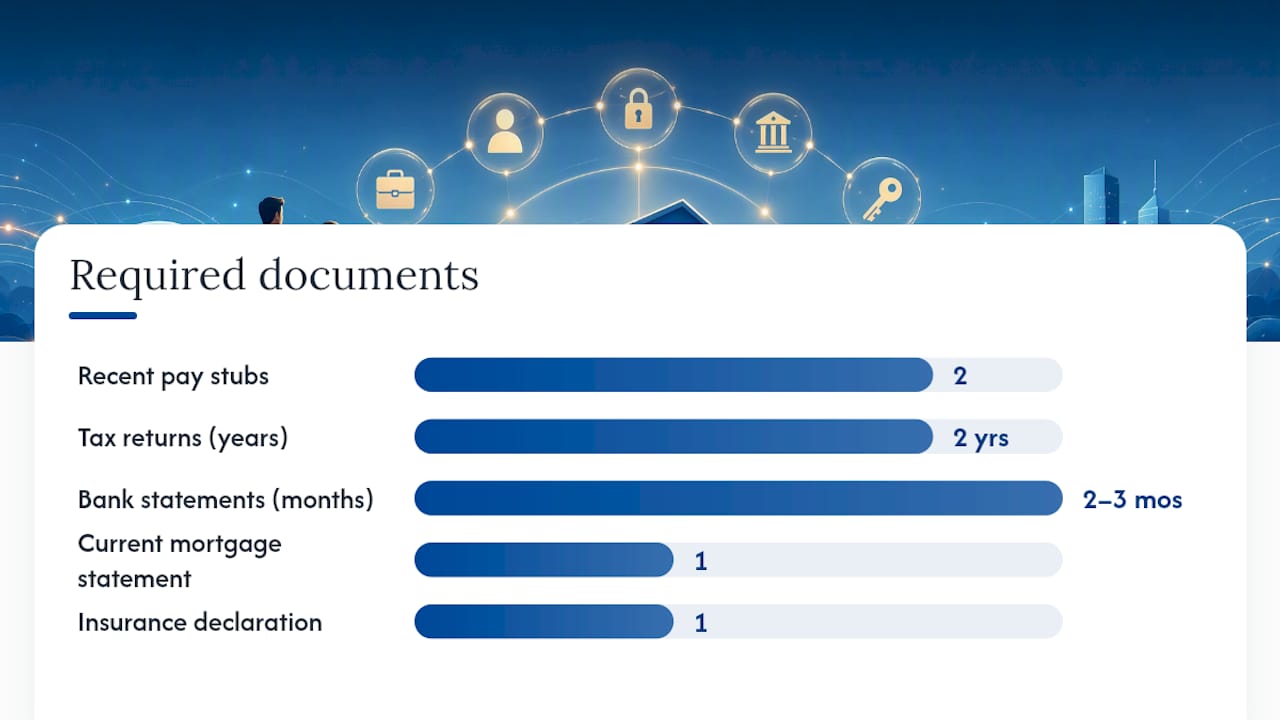
Expect income and employment verification through pay stubs and tax returns; for divorce-related refinancing, see Your Guide to Refinancing Home After Divorce in Florida for crucial legal considerations. Have these ready:
- Two recent pay stubs and two years of tax returns
- Two to three months of bank statements
- Your current mortgage statement and homeowners insurance declaration
Most refinances require a full appraisal, though certain FHA, VA, and USDA streamline programs waive it under specific eligibility rules worth confirming before you apply.
How Long Does the Refinance Process Take?
Plan for 45 to 60 days from application to closing table, though a well-prepared file can move faster.
- Request rate quotes and compare APRs across lenders
- Submit your formal application and documentation
- Schedule the appraisal
- Move through underwriting review
- Sign closing documents and fund the new loan
Title issues, appraisal gaps, and slow document turnaround are the usual culprits behind delays. Responding to underwriter requests within a day or two, rather than letting them sit, keeps your file moving and often shaves a week or more off the timeline.
Rate-and-Term vs. Cash-Out Refinance vs. Recasting
These three tools solve different problems, and mixing them up is a common, costly mistake. A rate-and-term refinance changes your rate or term without touching your balance, and it's the natural pick when your only goal is a better rate or a shorter payoff.
- Cash-out refinance: raises your principal balance to hand you equity as cash, usually at a higher rate than a rate-and-term deal
- Recast: you make a lump-sum principal payment and the lender re-amortizes the same loan at a lower payment, with no new rate and far lower fees than a refinance
- Rate-and-term refinance: the right call when your rate or term is the problem, not your cash position
If your existing rate is already competitive and you just came into extra cash, a recast often beats a refinance on cost.
When Does Refinancing Actually Pay Off?
Run the numbers before assuming a lower rate automatically wins. On a $350,000 balance, dropping from 7% to 6% on a 30-year term saves roughly $230 a month, and against $8,000 in closing costs that breaks even in about 35 months.
- A 0.5% drop still helps if you plan to stay long enough and your closing costs are on the lower end
- A rebuilt credit score can unlock a materially better rate even if market rates haven't moved
- Watch for the term-extension trap: resetting a 20-year-old mortgage back to 30 years can lower your payment while quietly adding years of interest
Running your specific numbers through a breakeven check before applying is the single best filter for whether a refinance is worth pursuing at all.
What Lenders Wish More Borrowers Knew
Borrowers who request a Loan Estimate from two or three lenders before committing almost always end up with a better APR than borrowers who take the first offer. Fees vary more than headline rates suggest.
Gather your pay stubs, tax returns, and current mortgage statement before your first call. Ask directly about rate locks and float-down options, since a lock protects you from rate movement during underwriting, and a float-down lets you capture a rate drop if one happens before closing. David, who covers mortgage financing for Lending Bankers Mortgage, recommends running your numbers through a personalized payment calculator before comparing lender quotes, since your specific balance and timeline change the math more than generic examples can show.
Publisher's Take: What to Do Next
Check your breakeven math first, before you fall in love with a rate. If the math works, request Loan Estimates from three lenders and compare APRs side by side. Call a broker rather than a single bank when your situation involves self-employment income, a foreign national status, or a jumbo balance. Have your last two pay stubs, tax returns, and mortgage statement ready for that first conversation.
— David
Get a Personalized Refinance Analysis
If you're weighing whether a rate-and-term refinance actually saves you money, the fastest path isn't another rate table. It's running your exact balance, rate, and timeline through a real calculation. Lending Bankers works directly with homeowners across Miami and Florida to build that breakeven analysis around your loan, not a generic scenario, and to walk you through FHA, VA, and conventional refinance options side by side.

Start with the Mortgage Calculator Miami to test your numbers, then read how to know if refinancing is worth it for the fuller picture. When you're ready to talk specifics, reach out to Lending Bankers with your most recent mortgage statement, two pay stubs, and two years of tax returns on hand. That's enough for a real conversation about your rate, your term, and whether now is the right time to move.
Where to Verify Rates and Run the Numbers
Check Bankrate's refinance rate tables for current pricing across 30-year, 15-year, and adjustable products before you talk to a lender. Cross-reference any quote against your Loan Estimate and compare APR, not just the advertised rate, since fees can shift the real cost significantly between offers.
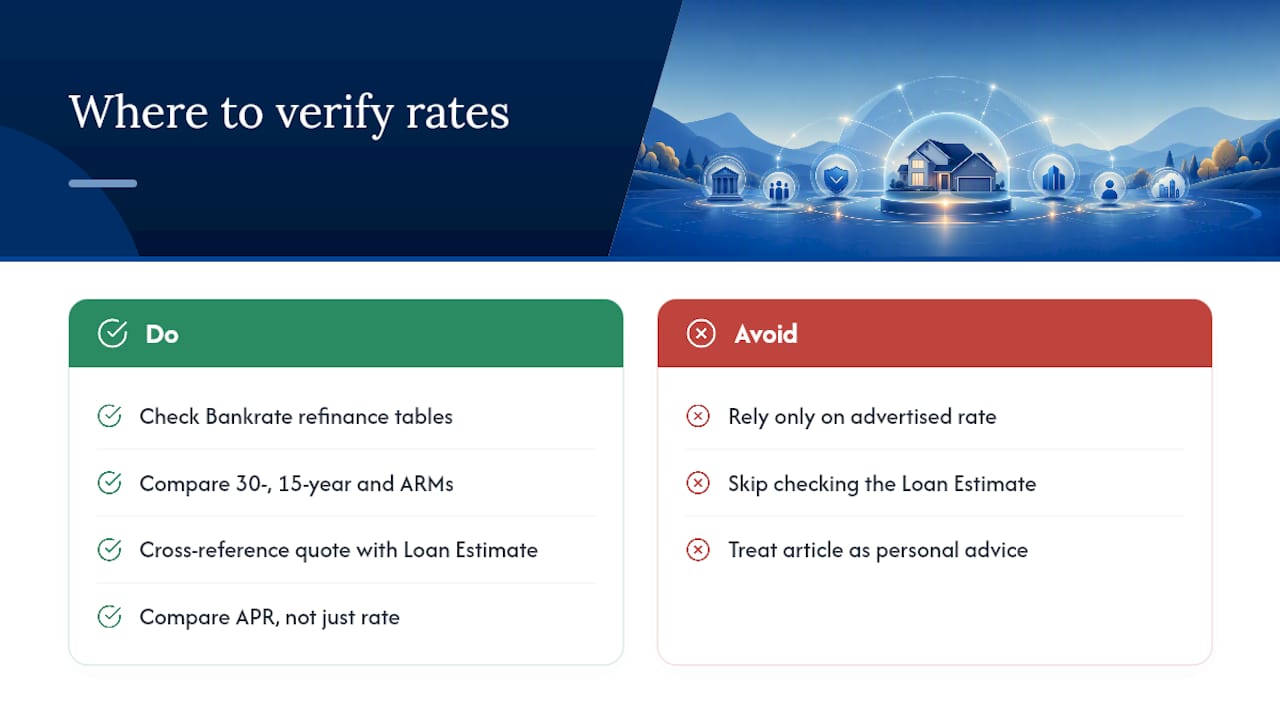
This article is general information, not a substitute for advice from a qualified financial advisor. Consult a qualified financial professional about your own circumstances before acting on anything here.
Sources
- Rate-and-Term Refinance Explained: Advantages over Cash-Out | Investopedia
- Current Refinance Rates - Compare Rates Today | Bankrate
- Is Now a Good Time to Refinance? | Experian