
A mortgage preapproval is a conditional statement from a lender showing how much you can likely borrow, based on your verified credit, income, and assets. It's the document sellers expect to see before they take your offer seriously in a competitive market. A preapproval isn't a guaranteed loan commitment, though. It's a strong signal, not a done deal, and understanding that distinction shapes everything that follows.
TL;DR:
- Credit score, debt-to-income ratio, income documentation, and verified assets most influence preapproval amounts and can be affected by recent financial changes.
- Preapproval validity typically lasts 30 to 60 days, and any job changes, new debts, or unexplained bank deposits can void your letter before closing.
- Discrepancies like large, unexplained deposits or undisclosed debts should be disclosed upfront to avoid delays during verification.
- A denial often results from documentation gaps or credit issues that can be addressed through disputes or credit improvement strategies.
- Working with a mortgage broker ensures your documentation is thoroughly reviewed and matched with suitable lenders, especially for non-standard profiles.
Table of Contents
- The Mortgage Pre Approval Process, Step by Step
- What Lenders Actually Check Before Approving You
- Preapproval Vs. Prequalification: Which Do You Need?
- Timeline, Validity, and What Can Invalidate Your Letter
- What To Do If You're Denied (Or Want a Stronger Offer)
- How Lending Bankers Helps You Get Preapproved Right
- Three Things Buyers Overlook During Preapproval
- Get Help Preparing a Preapproval That Holds Up
- Where This Information Comes From
- Sources
The Mortgage Pre Approval Process, Step by Step
Getting preapproved isn't a single event. It's a sequence you can control if you prepare before you ever fill out an application. Lenders generally follow a consistent six-step process: set your budget, check your credit, gather documents, shop lenders, submit applications, and collect your letters.
Here's how it plays out in practice:
- Determine your realistic budget. Look at your income, savings, and monthly obligations before you talk to anyone.
- Choose between a bank, credit union, or mortgage broker. A broker like Lending Bankers works across multiple lenders to match you with programs, including FHA, VA, jumbo, and foreign national loans, that a single bank might not offer.
- Gather your documents. Have them ready before you apply so verification doesn't stall.
- Submit your application and consent to a credit check.
- Wait for verification. The lender confirms income, assets, and debt.
- Review your preapproval letter carefully once it arrives.
The document checklist matters more than most buyers expect:
- Government-issued photo ID
- Recent pay stubs (usually 30 days)
- W-2s or 1099s for the past two years
- Two years of federal tax returns
- Two to three months of bank statements
- Statements for retirement or investment accounts
- Gift letters, if part of your down payment comes from family
When you review the letter itself, check three things: the loan amount, the rate assumptions used to calculate it, and the expiration date. Ask the lender directly what they verified versus what they took on your word. Some lenders lean on self-reported information more than others, and that distinction affects how much weight a seller will give your offer.
Pro Tip: Get preapproved before you start touring homes seriously. It surfaces credit or documentation problems while you still have time to fix them, rather than discovering them mid-negotiation.
What Lenders Actually Check Before Approving You
Four inputs drive your preapproval amount: credit score, debt to income ratio, income documentation, and verified assets. Each one moves the number differently, and knowing which lever affects you most helps you focus your prep time where it counts.
- Credit score. Higher tiers unlock better rates and more loan programs; scores near the bottom of qualifying ranges often mean higher rates or added conditions.
- Debt to income ratio (DTI). Lenders look at both front end DTI (housing costs alone) and back end DTI (all monthly debts combined), and most programs cap the back end figure well below your gross income.
- Income documentation. W-2 employees typically have the smoothest path. Self-employed borrowers and 1099 contractors need two years of tax returns and sometimes profit and loss statements.
- Assets. Bank and investment statements confirm you have funds for a down payment and reserves beyond the purchase price.
Lenders review credit, income, DTI, and assets together rather than in isolation, which is why a strong income can offset a middling credit score, and vice versa. A large, unexplained bank deposit right before you apply, a new car loan, or adding a co-signer late in the process can all shift your numbers and slow verification down.
Preapproval Vs. Prequalification: Which Do You Need?
Prequalification and preapproval sound interchangeable, but sellers don't treat them that way. Prequalification is typically an informal estimate based on numbers you report yourself, often with no credit check or a soft one that doesn't affect your score. Preapproval requires a formal application, document verification, and usually a hard credit inquiry.
That difference in rigor translates directly into how much a seller trusts your offer:
- Prequalification works well for early exploration, when you're testing what price range makes sense before you're ready to shop.
- Preapproval is what you want once you're actively touring homes and preparing to write offers, especially in a competitive market where sellers compare buyers side by side.
If you're weeks away from serious house hunting, skip prequalification and go straight for the verified letter.
Timeline, Validity, and What Can Invalidate Your Letter
Most preapproval letters stay valid for 30 to 60 days, though some lenders extend that window to 90 days. Verification itself usually takes a few days to about two weeks, depending on how quickly you supply documents.
A handful of common mistakes can quietly void your letter before you even reach the closing table:
- Switching jobs or changing income structure mid process
- Opening new credit cards or taking on a car loan
- Adding or removing a co-signer after the fact
- Depositing large, unexplained sums into your bank account
- Failing to disclose existing debts upfront
If your home search outlasts your letter's validity window, contact your lender before it expires. Refreshing a preapproval usually means resubmitting recent pay stubs and bank statements rather than starting the entire process over.
What To Do If You're Denied (Or Want a Stronger Offer)
A denial isn't the end of the road. It's information you can act on.
- Ask the lender for the specific denial reason and the credit score they used. Lenders are required to disclose this, and it tells you exactly what to fix.
- Dispute any credit report errors immediately. Errors can take 30 to 45 days to resolve but often move your score fast once corrected.
- Pay down high-interest revolving balances before reapplying. This improves your DTI and your credit utilization simultaneously.
- Avoid opening new credit while you're rebuilding. Even a small new account can undo months of progress.
- Consider a different loan program or broker if your profile doesn't fit conventional guidelines. Options like FHA loans or alternatives to conventional financing sometimes accommodate borrowers that traditional underwriting rejects.
Timelines vary widely: a credit dispute might resolve in a month, while rebuilding a damaged score for a better rate can take six months or longer. If your credit needs real work, a structured improvement plan beats guessing at fixes.
Pro Tip: Don't reapply with the same lender using the same documentation. If the first submission had gaps, a broker who can shop your file across multiple lenders often finds a better fit faster than repeating the same application.
How Lending Bankers Helps You Get Preapproved Right
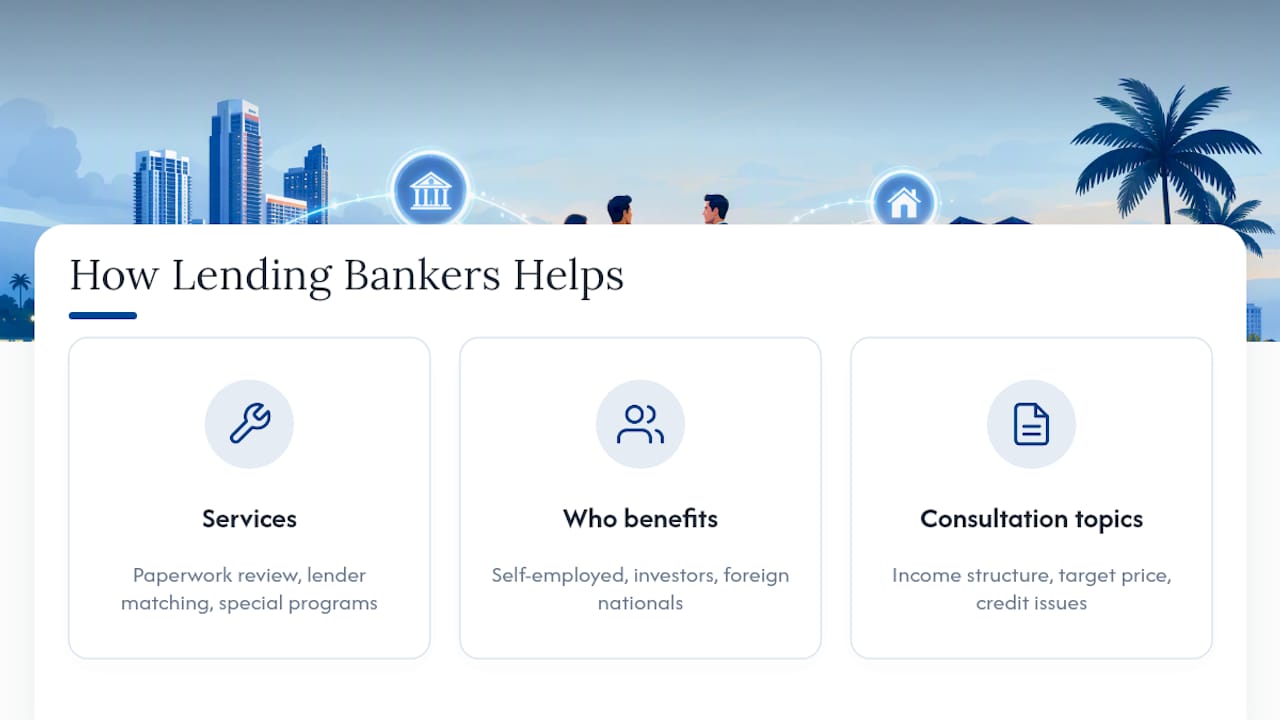
David and the team at Lending Bankers work through preapproval with clients across Miami and Florida every week, and the pattern is consistent: most denials trace back to documentation gaps, not weak finances. Lending Bankers reviews your paperwork before submission, matches you to lenders suited to your profile, and handles specialized programs, including FHA, VA, jumbo, hard money, and foreign national loans, that generic bank applications often mishandle.
Self-employed borrowers, investors, and foreign nationals benefit most from this kind of hands-on guidance, since their documentation rarely fits a standard checklist. A consultation typically covers your income structure, target price range, and any credit concerns worth addressing before you formally apply.
Three Things Buyers Overlook During Preapproval
The biggest delays I see aren't about weak credit or low income. They're about timing and disclosure. A buyer deposits a wedding gift or a bonus check right before applying, and suddenly the underwriter needs a paper trail for money that was always legitimate. Document the source of any unusual deposit before you apply, not after someone asks.

Job changes are the second trap. Even a lateral move to a better-paying role can restart verification timelines if it happens mid underwriting. If a new job is optional right now, wait until after closing.
Third: tell your lender about past credit issues or unusual income upfront. Surprises discovered mid process cost more time than problems disclosed on day one.
— David
Get Help Preparing a Preapproval That Holds Up
A do-it-yourself preapproval application works fine until a document gap or an overlooked debt slows you down at the worst possible moment. Lending Bankers is the alternative to guessing your way through bank paperwork alone. As a Florida mortgage brokerage, the team reviews your documentation before submission, matches you against lenders suited to your specific profile, and stays with you through underwriting, whether you're a first-time buyer, an investor, or a foreign national navigating financing for the first time.

That kind of follow-through matters most for borrowers whose finances don't fit a standard checklist: self-employed applicants, investors juggling multiple properties, or anyone considering alternative loan programs instead of conventional underwriting. If you're ready to see what you qualify for, visit Lending Bankers Mortgage to start a consultation and get your documentation reviewed before you apply.
Where This Information Comes From
The Consumer Financial Protection Bureau explains what a preapproval letter legally represents and its limits. USA Today details typical validity windows and lender review criteria. Investopedia breaks down the prequalification versus preapproval distinction, and Experian outlines the standard application steps and credit impact. Lending Bankers's own Miami loan approval guide offers a local, borrower-focused walkthrough.
This article is general information, not a substitute for advice from a qualified financial advisor. Consult a qualified financial professional about your own circumstances before acting on anything here.
Sources
- How mortgage preapproval works: Steps, requirements and tips
- Pre-Qualified vs. Pre-Approved: What’s the Difference?
- How to Get Preapproved for a Mortgage - Experian