
The Loan Estimate gives you a standardized projection on a three-page form shortly after applying, built to help you shop lenders. The Closing Disclosure is a standardized five-page, legally binding final version that you must receive well before closing. Comparing the two, line by line, during that three-day window is how you catch errors before they become your problem at the closing table.
TL;DR:
- Most line items between the Loan Estimate and Closing Disclosure should match closely unless there are approved changes or shopping differences.
- Regulatory rules limit how much certain fees, like lender origination charges, can increase from the estimate to the final disclosure.
- A mismatch outside tolerance limits requires immediate clarification with your loan officer to prevent surprises at closing.
- The Closing Disclosure becomes legally binding once signed, confirming the final loan terms and costs, unlike the estimate.
- Review the "What has changed" table in the Closing Disclosure to quickly identify any significant, unexplained fee increases.
Table of Contents
- What Is a Loan Estimate and When Do You Get It?
- What Is a Closing Disclosure and What Does It Confirm?
- How Do the Loan Estimate and Closing Disclosure Compare?
- Why Do Numbers Change Between the Two Forms?
- How Do You Review Your Loan Estimate and Closing Disclosure?
- How Lending Bankers Helps You Read the Fine Print
- Get Your Loan Estimate or Closing Disclosure Reviewed Before You Sign
- Where to Find Official Loan Estimate and Closing Disclosure Resources
- Sources
- FAQ
What Is a Loan Estimate and When Do You Get It?
Once you submit a mortgage application, your lender has to hand you a Loan Estimate within three business days. Regulators define "application" narrowly here: your name, income, Social Security number, property address, estimated property value, and the loan amount you want. Provide those six items and the clock starts, whether or not you've signed anything formal.
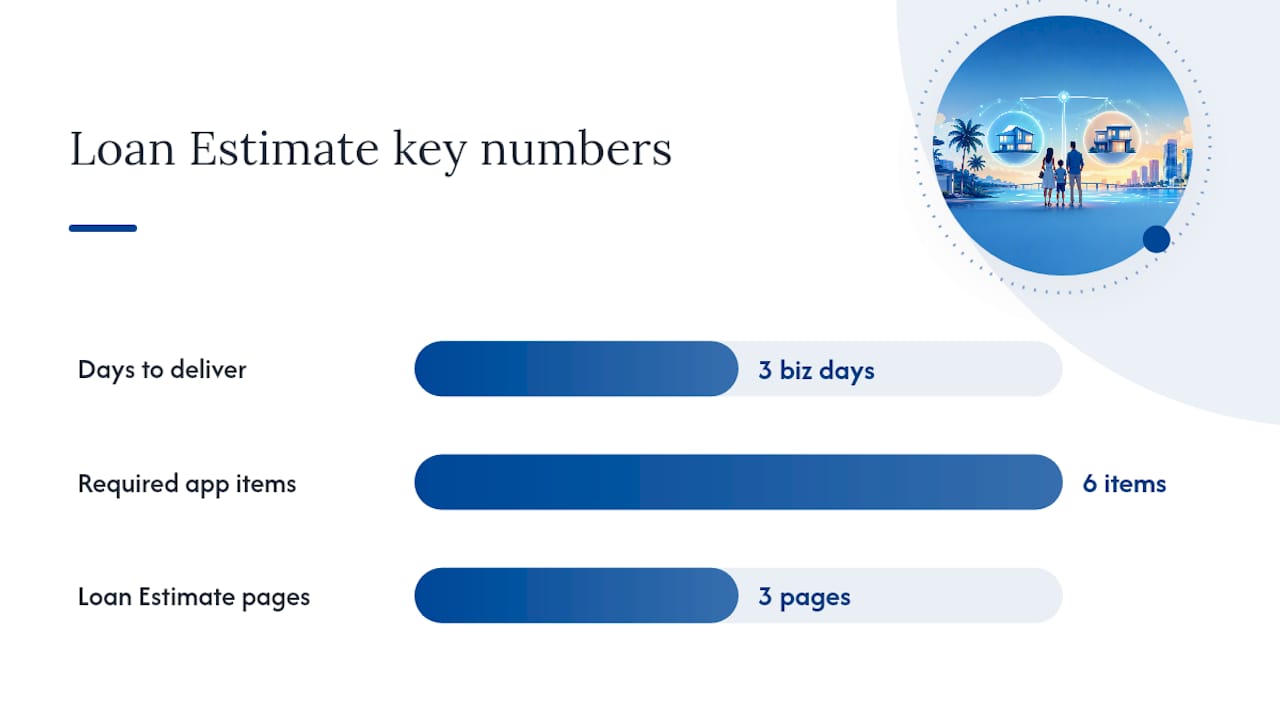
The Loan Estimate itself runs three pages and covers your loan terms, projected monthly payments, and estimated costs at closing, broken into loan costs and other costs, plus a rough calculation of cash to close. Every lender fills out the same standardized form, which is exactly why you should ask multiple lenders for estimates on identical terms, same rate lock period, same loan type, same points, to better understand the differences between secured and unsecured loans. Comparing mismatched scenarios tells you nothing useful.
When you're reviewing your Loan Estimate, watch for:
- An interest rate that doesn't match what you were quoted verbally
- Origination charges that seem high relative to your loan amount
- A prepayment penalty box that's checked when you didn't expect one
- Estimated taxes or insurance that look disconnected from the actual property
Remember that a Loan Estimate isn't a promise. It's an early snapshot the lender expects to hold up, not a guarantee that you're approved.
What Is a Closing Disclosure and What Does It Confirm?
A Closing Disclosure is the document that replaces estimates with verified numbers. The CFPB defines it as a five-page form lenders must deliver at least three business days before your scheduled closing, giving you time to compare it against the Loan Estimate you received earlier. Unlike the Loan Estimate, this document reflects underwriting decisions, a completed appraisal, and confirmed vendor charges. Nothing on it should be a guess.
The five pages track closely with the Loan Estimate's structure: loan terms, projected payments, costs at closing, a detailed calculating cash to close table, and loan and disclosure summaries. That parallel structure isn't accidental. The TILA-RESPA integrated disclosure guide requires the Closing Disclosure to list cost categories in the same order as the Loan Estimate, specifically so you can compare them side by side without hunting through reformatted sections.
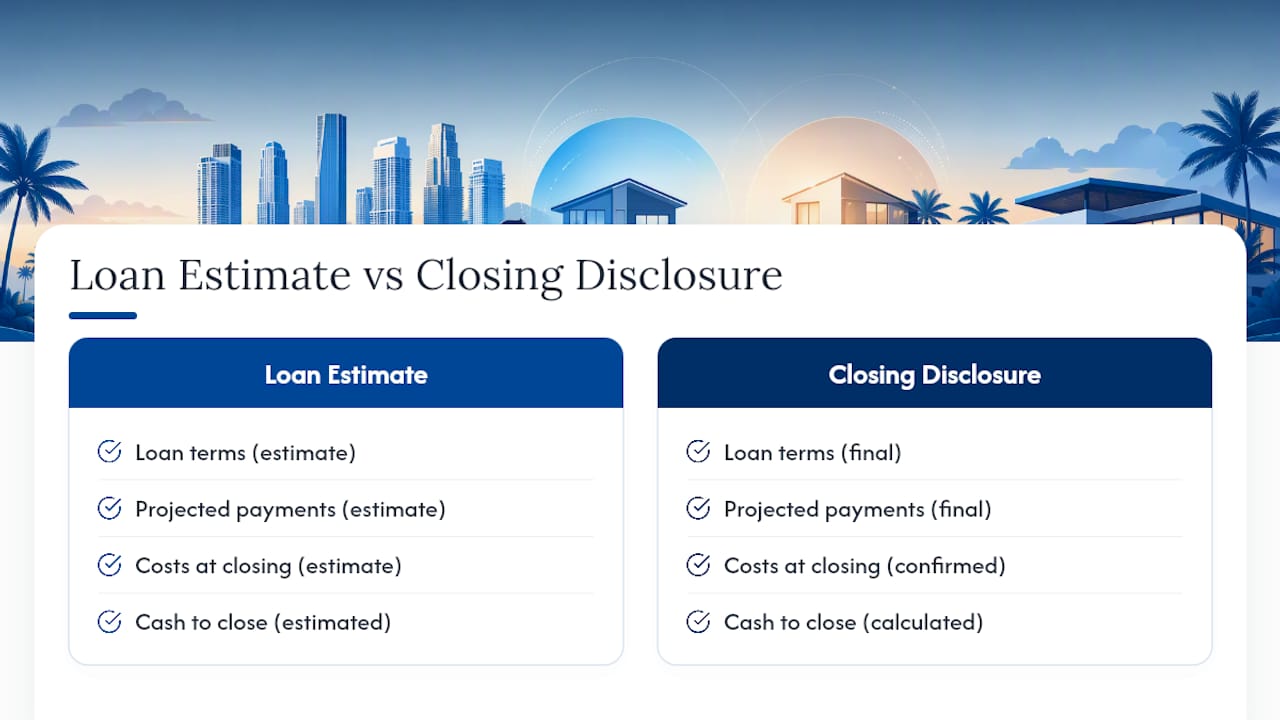
When reviewing your Closing Disclosure, confirm that core terms like loan amount, interest rate, monthly payment, escrow setup, and prepaid items align with your expectations. If your lender fails to provide it on time or hides material changes without reissuing, this is a compliance concern to address immediately.
How Do the Loan Estimate and Closing Disclosure Compare?
Set side by side, the differences between the two forms are less about content and more about certainty. The Loan Estimate is a working draft; the Closing Disclosure is the record.
| Feature | Loan Estimate | Closing Disclosure |
|---|---|---|
| Purpose | Early cost projection for shopping lenders | Final, verified terms and costs |
| Timing | Within 3 business days of application | At least 3 business days before closing |
| Page count | 3 pages | five pages |
| Legal status | Estimate, not a commitment | Legally binding once signed |
| Loan terms | Projected | Confirmed |
| Cash to close | Estimated | Calculated with a "what changed" table |
Pro Tip: The Closing Disclosure includes a table specifically labeled "Use this table to see what has changed from your Loan Estimate," so you don't have to build your own comparison from scratch. Start there.
Most line items should track closely between the two documents. Loan amount, interest rate, and loan type rarely shift unless something material changed. Third-party fees you shopped for yourself, like your own title company or homeowners insurance choice, have more room to move. The rule prescribed under Regulation Z requires specific labels and a fixed order for how these figures appear, precisely so a shift in one section doesn't get lost among the others.
Why Do Numbers Change Between the Two Forms?
Some movement between your Loan Estimate and Closing Disclosure is normal and legal. Federal rules group closing costs into tolerance categories that limit how much certain fees can grow.
- Zero tolerance: Lender origination charges and fees paid to the lender's affiliates generally cannot increase at all.
- 10% cumulative tolerance: Fees for services you didn't shop for yourself, like a required survey, can rise, but only as a group, and only up to 10% over the original estimate.
- No limit: Prepaid interest, property taxes, and homeowner's insurance premiums you shop for independently can change with market conditions or your own choices.
Legitimate reasons for a shift include a new appraisal value, a rate lock you extended or changed, a borrower request to switch loan products, or new information the lender didn't have at application. When any of these qualify as a "changed circumstance," the lender can issue a revised Closing Disclosure, and if the change increases your APR beyond a set threshold, adds a prepayment penalty, or swaps your loan product, the three-day waiting period restarts from the reissue date.
Pro Tip: If a fee jumped and no one explained why, ask your loan officer to point to the specific changed circumstance in writing. A vague answer is a signal to keep pushing.
How Do You Review Your Loan Estimate and Closing Disclosure?
Use your three-day window methodically rather than skimming the last page for the total.
- Confirm identity and property details. Your name, the property address, and the loan purpose should match your application exactly.
- Check the core loan terms. Loan amount, interest rate, APR, monthly payment, and loan product need to match your Loan Estimate unless you've been told about a specific change.
- Walk through closing costs and cash to close. Compare the Calculating Cash to Close table against your Loan Estimate figure and look for unexplained jumps in escrow or prepaid items.
- Flag unfamiliar names or charges. A new vendor listed in the costs section, or a fee that wasn't on your Loan Estimate at all, deserves a direct question to your lender before you sign anything.
Pro Tip: If you find a discrepancy that falls outside tolerance limits, contact your loan officer immediately. Depending on the issue, you may be entitled to a lender credit or a corrected Closing Disclosure that resets your review period.
How Lending Bankers Helps You Read the Fine Print
Reviewing a Closing Disclosure against a Loan Estimate is easier when someone who does this daily walks through it with you. Some mortgage brokers work with homebuyers, investors, and foreign national borrowers, and part of that work is sitting down with clients during the three-day review to flag tolerance violations, explain why a fee moved, and confirm the numbers before signing day.. Clients have described the difference this kind of review makes heading into closing..
If you have a Loan Estimate or Closing Disclosure in hand right now and something doesn't add up, upload it for a review or schedule a call before your closing date.
— David
Get Your Loan Estimate or Closing Disclosure Reviewed Before You Sign
A lender handing you a form and a lender explaining that form are two different experiences, and the second one is what keeps borrowers from signing off on fees they never agreed to. Lending Bankers works alongside homebuyers and investors across Miami and Florida to walk through Loan Estimates and Closing Disclosures line by line, flag tolerance violations, and answer the "why did this change" questions before closing day arrives.
Whether you're comparing offers from multiple lenders or holding a Closing Disclosure that doesn't match what you expected, Lending Bankers Mortgage can review your documents and explain exactly what you're looking at. If you're still weighing which type of home purchase loan fits your situation, that's a conversation worth having too. Call, submit a contact form, or upload your paperwork directly through the site to get a document review scheduled this week.
Where to Find Official Loan Estimate and Closing Disclosure Resources
The Consumer Financial Protection Bureau publishes model Loan Estimate and Closing Disclosure forms along with sample completed versions. For the full regulatory detail behind the layout and required tables, the TILA-RESPA integrated disclosure guide and 12 CFR § 1026.38 lay out exactly what lenders are required to disclose and how.
This article is general information, not a substitute for advice from a qualified financial advisor. Consult a qualified financial professional about your own circumstances before acting on anything here.
Sources
- What is a closing disclosure? | Consumer Financial Protection Bureau
- TILA-RESPA integrated disclosure: Guide to the Loan Estimate and Closing Disclosure forms
- What Is a Closing Disclosure? | Bankrate
- 12 CFR § 1026.38 - Closing Disclosure
FAQ
Does a Loan Estimate Mean You're Approved?
No. A Loan Estimate is a projection, not an approval. Final approval and confirmed terms appear only in the Closing Disclosure after underwriting and appraisal are complete.
How Many Days Are There Between the Loan Estimate and Closing?
There's no fixed universal gap, but the law requires the Closing Disclosure to arrive at least three business days before closing, and the Loan Estimate must arrive within three business days of your application. The time between the two depends on how long your loan takes to process.
Can the Loan Estimate and Closing Disclosure Be Issued the Same Day?
No. They serve different points in the process and carry separate timing rules, so they can't be issued together. The Closing Disclosure specifically requires its own three business day waiting period before you close.
How Does the Cost Information Differ Between the Two Forms?
The Loan Estimate shows projected costs based on early information; the Closing Disclosure shows final, verified costs after underwriting. The Closing Disclosure also includes a dedicated table showing exactly what changed from your Loan Estimate, so discrepancies are easy to spot rather than something you have to calculate yourself.