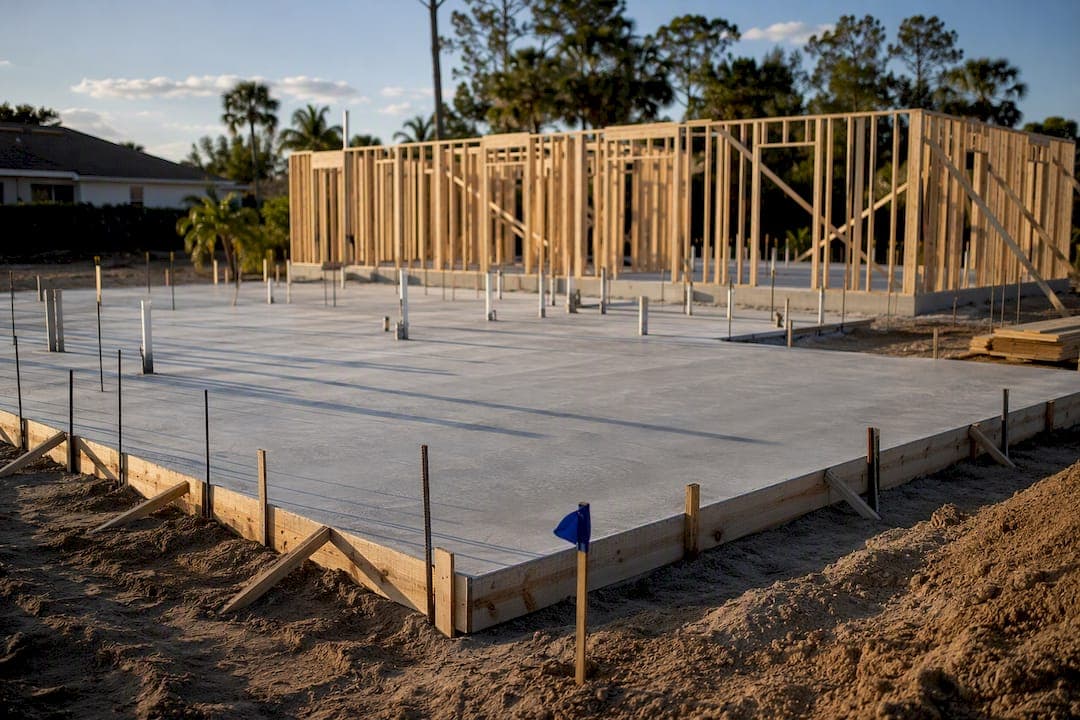
A construction to permanent loan Florida borrowers use most often is a one-time close loan: it bundles your build financing and your permanent mortgage into a single closing, so your rate locks before the first shovel hits the dirt. This fits Florida residents building a primary home on land they already own or are buying. One caution: Florida's permitting reviews and storm-resilient building codes can stretch your construction timeline, so budget extra weeks before you convert to permanent financing.
TL;DR:
- A one-time close loan in Florida combines construction and permanent financing into a single, locked rate, reducing the risk of rate hikes during build delays.
- Florida lenders require comprehensive project documentation, including signed builder contracts, permits, and insurance, to avoid underwriting delays.
- Construction costs include interest-only payments during build, contingency reserves, permit and inspection fees, and closing costs, with liquid reserves crucial for unexpected expenses.
- The construction process often takes longer than in other states due to storm resilience codes and inspection delays, especially during hurricane season.
- Government-backed options like FHA, VA, and USDA loans adjust eligibility and requirements, with VA and FHA offering lower or no down payments for qualified borrowers.
Table of Contents
- How Construction To Perm Loans Work In Florida
- What Do Florida Lenders Require For Approval?
- What Does A Construction To Perm Loan Cost In Florida?
- How Long Does The Process Take From Permit To Move-In?
- FHA, VA, And USDA Construction To Perm Options In Florida
- How Do You Choose The Right Lender In Florida?
- Broker Or Direct Lender: Which Fits Your Florida Build?
- Financing Your Florida Build With Lending Bankers
- Sources
- FAQ
How Construction To Perm Loans Work In Florida
Two structures dominate the market. A one-time close (single-close) loan combines the construction loan and the permanent mortgage into one closing, one set of fees, and one locked rate before you break ground. A two-time close loan treats them as separate transactions, meaning you close on the construction loan, build the home, then close again on a fresh mortgage once it's finished, exposing you to rate movement in between.
- You close, and your builder starts drawing funds from an escrow-controlled draw account as milestones are completed.
- Your lender or a third-party inspector verifies each stage before releasing the next draw.
- Once the home passes final inspection, the loan automatically converts, and you begin making standard mortgage payments.
During construction, most borrowers pay interest only on the funds already drawn, not on the full loan amount. The CFPB notes that construction loans typically carry higher rates than standard mortgages, which is part of why locking your permanent rate upfront matters so much in a one-time close structure.
What Do Florida Lenders Require For Approval?
Underwriters look at you and the project separately, and both files need to be complete before closing can move forward.
On the borrower side, expect lenders to check:
- Credit scores generally in the mid to upper range considered good by many lenders, depending on the program
- Debt-to-income ratio is generally capped within commonly accepted moderate limits by lenders
- Cash reserves covering several months of payments after closing
- Verified income documentation, including tax returns and pay stubs
On the project side, you'll need a signed fixed-price builder contract, complete architectural plans and specifications, proof of your builder's license and insurance, and your issued building permits. Appraisers value the home based on those plans and specs rather than an existing structure, and in Florida, that appraisal often accounts for wind-mitigation features and hurricane-resistant construction methods tied to current code. Our guide to Miami home loans breaks down documentation requirements in more detail if you want to prepare early.
Pro Tip: Gather your builder contract, plans, and permit applications before you apply. Incomplete project files are the single biggest cause of underwriting delays we see on Florida construction loans.
What Does A Construction To Perm Loan Cost In Florida?
Your down payment sets the floor, but it's rarely your only out-of-pocket cost.
Beyond the down payment, plan for:
- An interest reserve or interest-only payments during the build phase
- A contingency reserve, often 5 to 10% of the construction budget, for change orders
- Permit fees and inspection fees, which vary by county
- Closing costs and lender fees, similar in range to a standard purchase mortgage
Lenders treat your construction loan as a controlled draw account, not flexible cash, and they rarely add principal after closing. That's why liquid reserves beyond your down payment matter: if material costs spike or you add a change order, you need cash on hand rather than an expectation that the lender will simply lend more.
How Long Does The Process Take From Permit To Move-In?
Florida's timeline runs longer than in many states, largely because of code review.
- Permit and plan review: Florida's updated hurricane-resilient building codes have added scrutiny to plan reviews in many counties, which can push this stage past initial estimates.
- Construction draws: each draw ties to a completed milestone, a lender or third-party inspection, and sign-off before funds release, and any inspection delay pushes the next draw back.
- Final inspection and certificate of occupancy: this is the trigger event. Once your local building department issues the certificate, your loan converts to permanent financing and standard mortgage payments begin.
Build in extra weeks around inspections, especially during hurricane season, when inspector schedules and material deliveries both tend to slow down.
FHA, VA, And USDA Construction To Perm Options In Florida
Government-backed one-time close programs can lower your barrier to entry, but the rules differ enough that it's worth knowing which one fits your situation.
- FHA One-Time Close: finances the lot, construction, and permanent mortgage in a single closing for one-unit primary residences, with more flexible down payment guidance than conventional loans, though property use is restricted to owner-occupied homes.
- VA construction to perm: requires a VA-registered builder for any VA-guaranteed construction loan, and eligible veterans may qualify for no down payment and no private mortgage insurance on the permanent side.
- USDA single-close: available for eligible rural and semi-rural Florida properties, with income limits and geographic restrictions that rule out most urban and coastal parcels.
Each program has its own paperwork rhythm, and the TRID guidance allows lenders to disclose construction-to-perm loans as either one combined transaction or two separate ones, so ask your lender which method they use before you sign anything.
How Do You Choose The Right Lender In Florida?
Not every lender that offers a mortgage also understands one-time close construction lending, and that gap shows up fastest during draw requests.
Before you commit, ask:
- How many construction-to-perm closings has this lender handled in Florida in the past year?
- What's the typical turnaround time between a draw request and funding?
- Who pays for re-inspections if a milestone fails the first review?
- How are change orders handled, and does that affect your locked rate?
Ask your builder the same questions about draw timing and re-inspection costs, since a mismatch between builder expectations and lender policy is one of the most common causes of mid-project friction. Our page on comparing Miami home loan options can help you weigh lenders side by side.
Pro Tip: Get prequalified before you finalize your builder contract. Knowing your approved loan amount first keeps your plans, specs, and budget aligned from day one, instead of redesigning after the fact.
Once you've chosen a lender, the practical order is: prequalify, select a builder with documented Florida code experience, finalize architectural plans, then submit permit applications together with your loan application.
Broker Or Direct Lender: Which Fits Your Florida Build?

A mortgage broker earns its keep when your project doesn't fit a cookie-cutter file: a custom lot, a builder new to one-time close paperwork, or a program mix across FHA, VA, and conventional options. Brokers who work Florida construction deals regularly tend to know which lenders move draws fastest and which builders already meet local code documentation standards.
A direct lender can work fine if your project is straightforward and you already have a strong relationship with one institution. Either way, the right fit depends on how much hand-holding your specific project needs.
— David
Financing Your Florida Build With Lending Bankers
A mortgage brokerage can be a practical alternative to piecing together a construction loan on your own: instead of chasing separate quotes for FHA, VA, or conventional one-time close programs, you can work with a team familiar with lenders who handle draws quickly and builders meeting local code documentation standards.
Some mortgage brokers work with Florida borrowers on residential construction financing, including FHA, VA, and conventional construction-to-perm structures, and help coordinate draw schedules with builders so inspections don't stall projects. Clients can expect proactive updates at each stage, assistance assembling documentation packages, and a single point of contact managing draw requests to simplify communication. If you're ready to see what you qualify for, visit Lending Bankers to request an initial consultation and get your Florida build moving.
Sources
For readers who want to review the underlying rules directly: the CFPB's construction loan overview explains draw mechanics and conversion basics. The CFPB's TRID guidance covers disclosure rules. Fha details program eligibility, and the VA construction/permanent circular lays out builder registration and guaranty requirements for veterans.
This article is general information, not a substitute for advice from a qualified financial advisor. Consult a qualified financial professional about your own circumstances before acting on anything here.
- What is a construction loan? | Consumer Financial Protection Bureau
- FHA One-Time Close Construction-to-Permanent Loan
- Construction/Permanent Home Loans (VA circular)
- TILA-RESPA Integrated Disclosures and construction loans (CFPB TRID guide)
FAQ
Are Construction To Permanent Loans Worth It?
For Florida borrowers building a primary residence, a one-time close loan is often worth it because it locks your permanent rate before construction starts and eliminates a second closing. It's a stronger fit if you have solid reserves and a builder experienced with lender draw requirements.
What's The Monthly Payment On A $200,000 Construction Loan?
During construction, most borrowers pay interest only on the amount actually drawn, so early payments are lower than the final permanent payment. Once the loan converts, your payment shifts to standard principal-and-interest based on your locked rate, term, and the full loan balance.
Can I Convert My Construction Loan To A Permanent Loan?
Yes, that conversion is the entire point of a one-time close construction to permanent loan. Once your home passes final inspection and your local building department issues a certificate of occupancy, the loan converts automatically without a second closing.
How Much Do I Have To Put Down On A Construction To Permanent Loan?
Conventional programs commonly require around 10% down, while FHA one-time close loans and VA construction-to-perm loans can lower or eliminate that requirement for eligible borrowers. Your exact figure depends on the program, your credit profile, and your lender's guidelines, so it's worth getting prequalified before you commit to a builder contract.