
An appraisal waiver mortgage, formally called value acceptance or a Property Inspection Waiver, lets your lender skip the in-person home appraisal because automated underwriting already trusts the data on file. It typically goes to borrowers with strong credit, low loan-to-value ratios, and a property with recent, reliable comparable sales. The trade-off is straightforward: you save money and time, but you accept the lender's data instead of a fresh, independent valuation.
TL;DR:
- Automated underwriting systems favor appraisal waivers for properties with recent, reliable comparable sales and low risk profiles, primarily for borrowers with strong credit and low loan-to-value ratios.
- Lenders rely on massive databases and market data to determine waiver eligibility, with stricter rules for large loans, certain property types, or transactions involving rental income.
- The system's offer is time-limited, typically valid for around four months, and can be overridden by underwriters if new property issues arise or the window expires.
- Accepting a waiver saves borrowers fees and speeds up closing but risks missing hidden property issues that a full appraisal might uncover, especially if late-stage conditions change.
- When a waiver isn’t available, hybrid options like ACE+PDR or split appraisals may provide a middle ground between full appraisal costs and complete waiver reliance.
Table of Contents
- How Does an Appraisal Waiver (PIW/Value Acceptance) Work?
- Why Do Lenders Skip the Appraisal on Some Loans?
- Who Typically Qualifies for an Appraisal Waiver?
- How Is the Waiver Offer Generated and Delivered?
- What Are the Benefits and Risks of Accepting a Waiver?
- What Alternatives Exist Between a Full Appraisal and a Waiver?
- What Should You Ask Your Lender Before Counting on a Waiver?
- How Lending Bankers Approaches Appraisal Alternatives
- Get Expert Guidance on Your Appraisal Options
- Where to Read the Official Program Rules
- Sources
How Does an Appraisal Waiver (PIW/Value Acceptance) Work?
A Property Inspection Waiver, also called value acceptance or Automated Collateral Evaluation (ACE), allows a lender to accept the value you submitted on your loan application without ordering a traditional appraisal. The automated underwriting system, not a human appraiser, decides whether the risk profile supports skipping that step.
This is different from waiving your contract's appraisal contingency, which is a negotiating decision you make with a seller. An appraisal waiver is a lender and system decision based on your credit file, your loan-to-value ratio, and historical property data. You don't ask for one directly. The system either offers it or it doesn't, based on Fannie Mae's value acceptance guidance.
Why Do Lenders Skip the Appraisal on Some Loans?
Lenders rely on automated underwriting systems that pull from massive home valuation databases. When those records show consistent, predictable values in your neighborhood, the collateral risk drops enough that a new appraisal adds little value.
Freddie Mac's Automated Collateral Evaluation model works this way, cross-referencing your property against public records, prior appraisals, and market data before deciding whether a waiver is appropriate. Beyond risk modeling, there's a practical business reason too: waivers speed up closings and reduce friction for both the lender and you. Fewer appraisals ordered also means fewer scheduling delays during busy market periods, which matters when you're racing a rate lock deadline.
Who Typically Qualifies for an Appraisal Waiver?
Automated underwriting systems favor a specific profile. You'll see waivers most often with:
- Credit scores around 680 or higher, paired with a clean payment history.
- Low loan-to-value ratios, often tied to a down payment of 20% or more, though some refinances with substantial equity qualify too.
- Conventional loan types underwritten through Desktop Underwriter (DU) or Loan Product Advisor (LPA).
- A recent appraisal on file from a prior transaction on the same property, which gives the system confidence in current value.
- A strong local comp record, meaning enough recent, similar sales nearby to validate your submitted value.
Certain transactions are excluded no matter how strong your credit looks. Construction loans, two to four unit properties, transactions of $1,000,000 or more, and loans where rental income is used to qualify typically don't get offered a waiver, according to Zillow's breakdown of appraisal waiver eligibility. If you've refinanced this property before with the same lender, that history can also work in your favor since it adds another data point the system can trust.
How Is the Waiver Offer Generated and Delivered?
The process starts the same way any conventional loan does: you submit your full application, and your lender runs it through Desktop Underwriter for Fannie Mae loans or Loan Product Advisor for Freddie Mac loans. If the system's risk assessment supports it, the feedback certificate comes back with a value acceptance offer, or an ACE offer on the Freddie Mac side.
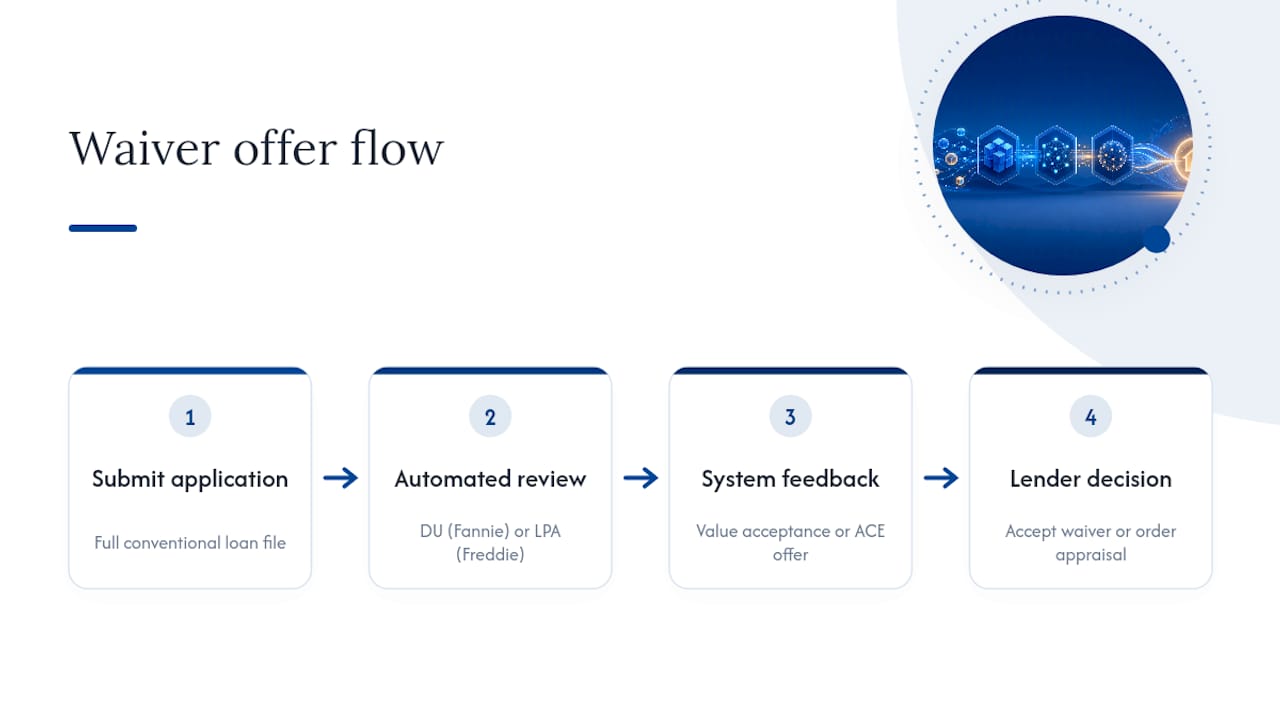
Your lender still has the final say. Even when the system offers a waiver, an underwriter can override it and order a full appraisal if something in your file, like a recent renovation or a flag on the property type, raises a question the data doesn't answer.
Timing matters more than most borrowers realize. Value acceptance offers typically stay valid for a limited window, often around four months from the date issued, according to Fannie Mae's selling guide. If your closing slips past that window, the lender has to go back and order an appraisal, which can stall your closing date right when you thought you were in the clear.
What Are the Benefits and Risks of Accepting a Waiver?
The upside is concrete. You typically avoid an appraisal fee that runs $300 to $700 depending on your market and property size, and you shave several days to two weeks off your closing timeline since you're not waiting on an appraiser's schedule. Freddie Mac reports that ACE alone has saved borrowers billions of dollars industry-wide since the tool launched.
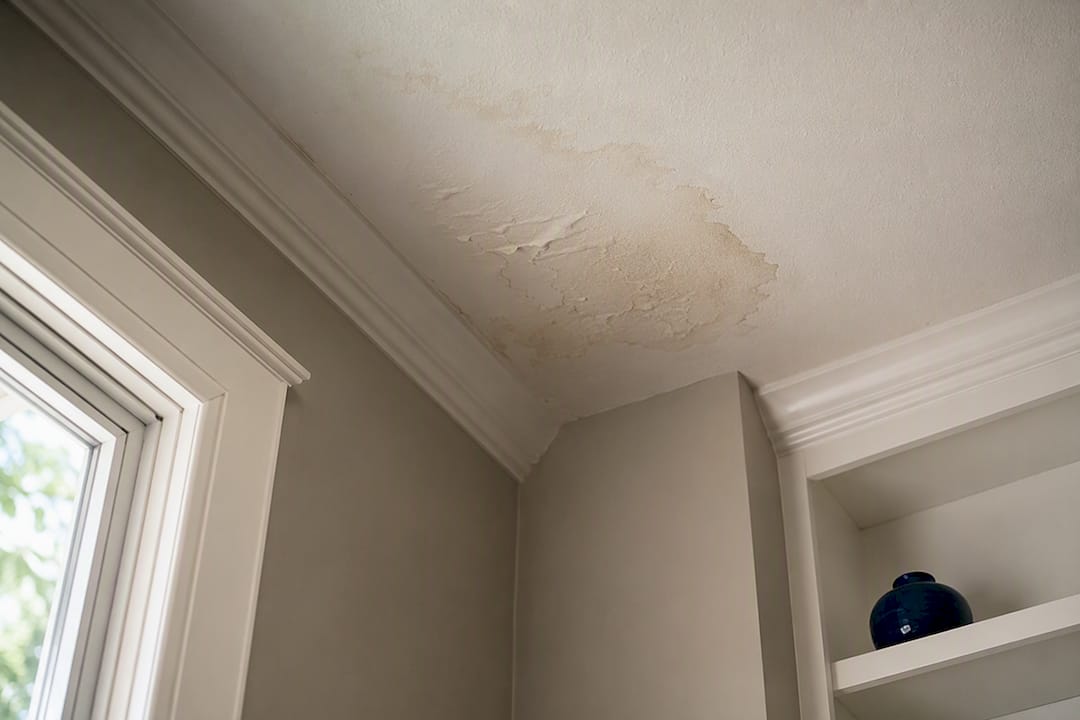
The risk sits on the other side of that same coin. A waiver reflects the system's confidence based on historical data, not a guarantee your home has no issues an appraiser would have caught. You could be paying full price for a property with hidden condition problems that a full appraisal report might have flagged.
There's also late-stage risk. If your lender discovers new information, or if your waiver expires before closing, an appraisal gets ordered anyway, sometimes with just days to spare. You can protect yourself with three habits: document your property's condition with your own photos, keep a small reserve set aside in case a late appraisal surfaces a gap, and confirm your waiver's exact expiration date in writing. Our Miami refinance appraisal guide walks through how appraisal timing affects a refinance closing specifically.
What Alternatives Exist Between a Full Appraisal and a Waiver?
When a straight waiver isn't offered but a full appraisal still seems like overkill, three middle options fill the gap. ACE+PDR pairs Freddie Mac's automated evaluation with an on-site property data report, where a trained data collector visits the home to capture photos, measurements, and condition notes without the analytical judgment of a licensed appraiser, per Freddie Mac's ACE+PDR program details.
Hybrid appraisals split the labor differently: a data collector gathers the on-site details, and a licensed appraiser analyzes that data remotely to form the final opinion of value. Desktop appraisals skip the site visit entirely, relying on public records, MLS data, and photos you or your agent supply. Lenders typically route you to one of these when the automated system flags your file as needing more data than a waiver allows, but not so much that a full appraisal is required.
What Should You Ask Your Lender Before Counting on a Waiver?
Before you build your closing timeline around skipping an appraisal, get specifics in writing. Ask your loan officer to show you the DU or LPA feedback certificate confirming the waiver offer exists, and pin down the exact expiration date on that offer.
Ask what would trigger the lender to order an appraisal anyway, and whether you'll be notified before that happens rather than finding out at the closing table. Provide any property details your lender requests promptly, since incomplete data is a common reason waivers get pulled back. Finally, budget for the possibility of a late appraisal fee, just in case. Our guide on refinance loan options from Miami lenders covers how different lenders handle these edge cases.
How Lending Bankers Approaches Appraisal Alternatives
We pursue a waiver path whenever the borrower's profile and property data genuinely support it, but we don't chase one at the expense of accuracy. When a file shows any ambiguity in condition or comps, we'd rather recommend a full appraisal or ACE+PDR than let a borrower close on a value that hasn't been properly checked. We track expiration dates closely and confirm property condition before relying on any waiver offer.
— David
Get Expert Guidance on Your Appraisal Options
Mortgage brokers check whether a waiver actually applies to your file instead of assuming it will, then route your loan through Desktop Underwriter or Loan Product Advisor with that outcome in mind from the start.

Mortgage brokers assist buyers, refinancers, and investors on a variety of loan types, submitting files to help avoid late-stage appraisal orders. If you're weighing whether an appraisal waiver could apply to your situation, run your numbers through our mortgage calculator and then reach out through Lendingbankers to talk through your file with a loan officer directly.
Where to Read the Official Program Rules
For the primary source material behind the guidance in this article, these programs and consumer guides are worth bookmarking:
- Fannie Mae's Value Acceptance page covers eligible and ineligible transactions in full detail.
- Freddie Mac's ACE and ACE+PDR pages explain the automated evaluation and property data report process.
- Zillow's appraisal waiver explainer breaks down borrower eligibility in consumer-friendly terms.
- The Mortgage Reports' no-appraisal guide covers typical fee ranges and borrower profiles for skipping an appraisal.
This article is general information, not a substitute for advice from a qualified financial advisor. Consult a qualified financial professional about your own circumstances before acting on anything here.
Sources
- Value Acceptance | Fannie Mae
- Automated Collateral Evaluation (ACE) | Freddie Mac
- What is an appraisal waiver? (Zillow)
- No-appraisal home equity loan guide (The Mortgage Reports)