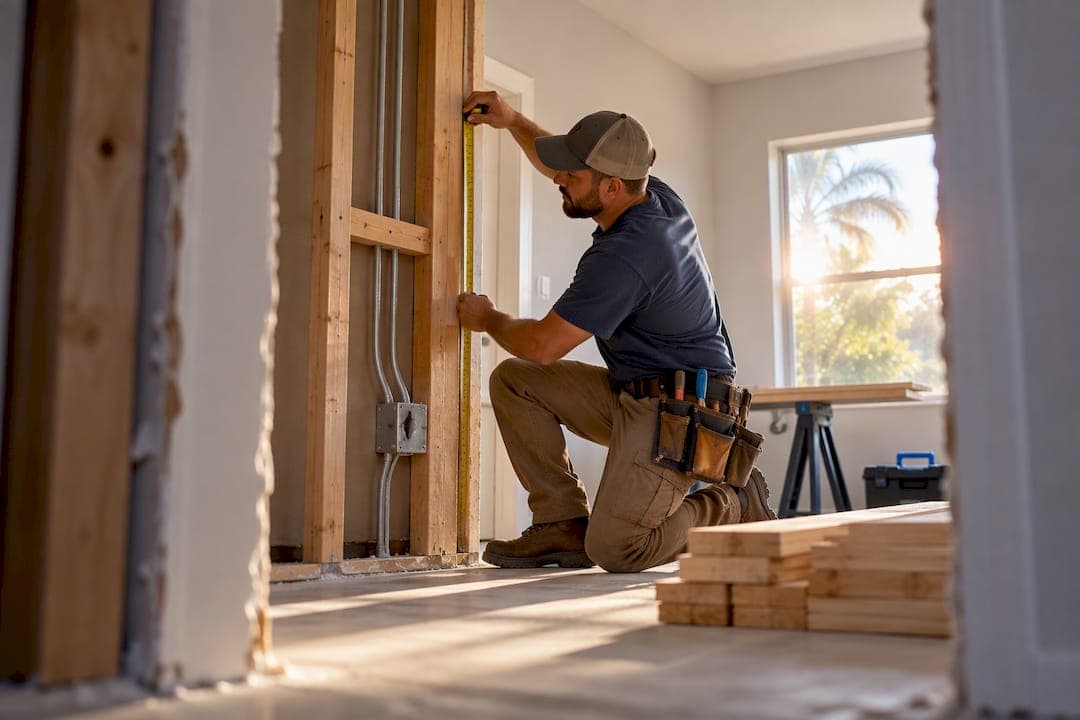
Yes, Florida buyers and homeowners can use an FHA 203(k) loan to purchase or refinance a home while financing repairs in one mortgage. Choose the Limited 203(k) for smaller, non-structural projects up to the FHA cap of $75,000, or the Standard 203(k) for major or structural rehab with a minimum repair cost of $5,000. Your county's FHA loan limit and the owner-occupancy requirement will shape what you can actually borrow.
TL;DR:
- The Standard 203(k) is suitable for structural repairs exceeding $75,000 or involving home foundations, while the Limited 203(k) covers minor cosmetic upgrades up to $75,000.
- Rehab funds are held in escrow and released in phases based on inspection approvals, with additional disbursements now allowed to improve contractor cash flow.
- Only owner-occupants are eligible, and properties must be primary residences, including one-to-four units, certain manufactured homes, or condo interiors, excluding investor flips.
- Closing takes longer than standard loans due to appraisal, consultant reviews, and permit acquisition, requiring early coordination to prevent delays.
Table of Contents
- 1. Limited vs Standard 203(k): Which Track Fits Your Florida Project?
- 2. How Draws, Escrow, and Holdbacks Work on a 203(k) Loan
- 3. Florida Loan Limits and What They Mean for Your Rehab Budget
- 4. Who Qualifies for a 203(k) Loan and Which Florida Properties Are Eligible
- 5. The 203(k) Process in Florida: Steps and Realistic Timelines
- 6. Florida-Specific Pitfalls: Permits, Utilities, and Contractor Cashflow
- 7. A Lender's View on Smoothing the 203(k) Process in Florida
- How a mortgage brokerage can support your 203(k) application
- Sources
- FAQ
1. Limited vs Standard 203(k): Which Track Fits Your Florida Project?
The FHA 203(k) program splits into two tracks, and choosing the right one early saves you time with your lender and consultant. The Limited 203(k) covers non-structural repairs and improvements, with a rehabilitation cap of $75,000 per current FHA limits, and does not require a 203(k) Consultant in most cases. The Standard 203(k) is built for major or structural work, carries a $5,000 minimum repair cost, and requires an FHA-approved 203(k) Consultant to prepare the work write-up and oversee draws.
- Limited 203(k): cosmetic upgrades, new flooring, kitchen or bath remodels, HVAC replacement, roofing, and minor code repairs.
- Standard 203(k): room additions, foundation repair, load-bearing wall changes, and any project involving structural alterations.
- Rule of thumb: if your project touches the structure of the home or exceeds $75,000 in repairs, plan for Standard 203(k) from the start.
Florida homes with older roofs, aging electrical panels, or hurricane-code deficiencies often start as Limited projects but tip into Standard territory once a consultant identifies structural issues.
2. How Draws, Escrow, and Holdbacks Work on a 203(k) Loan
Your 203(k) mortgage is based on the after-improved value of the home, sometimes called ARV, rather than its current condition. This lets you finance a property that would otherwise fail an appraisal, because the appraiser values the home as if the repairs are already complete. The rehabilitation funds are not handed to you at closing. Instead, they sit in an escrow account and are released to your contractor as work is completed and verified.
- Your lender opens a rehabilitation escrow account at closing, funded from your loan proceeds.
- Your contractor completes an agreed phase of work and submits a draw request.
- An inspector confirms the percent-complete using the HUD Draw Request form (HUD 9746-A), and the lender releases funds for that phase.
- A portion of each draw, typically a 10% holdback, is retained until the project passes final inspection.
A Mortgagee Letter updated Limited 203(k) draw procedures to allow additional draws and multiple disbursements per draw. That change directly reduces the cash-flow strain contractors feel when they front materials and labor before payment.
For Standard 203(k) projects, expect to submit a detailed work write-up, itemized cost estimates, the consultant's feasibility report, and updated draw requests at each construction milestone. Lenders use these documents, along with inspection reports, to confirm the project stays on budget and on schedule before releasing the next round of funds.
3. Florida Loan Limits and What They Mean for Your Rehab Budget
FHA loan limits are set county by county, and your total 203(k) loan, purchase price plus rehab costs, cannot exceed the limit for the county where the property sits. For 2026, the nationwide floor for a one-unit home is $541,287, while the high-cost ceiling reaches $1,249,125, depending on local median home prices.
- Look up your county's exact limit through HUD's loan limit lookup tool before you make an offer.
- Add your target purchase price to your estimated rehab budget, then compare the total to your county's ceiling.
- If a $350,000 home needs $60,000 in renovations, your $410,000 total loan needs to fit comfortably under your county's limit.
When the numbers do not fit, you have options: scale back the renovation scope, cover part of the rehab with cash, or explore private or bridge lending for the portion that exceeds FHA's cap. Some Florida counties near major metro areas sit closer to the ceiling, while more rural counties often sit near the floor, so this check matters before you fall in love with a fixer-upper.
4. Who Qualifies for a 203(k) Loan and Which Florida Properties Are Eligible
The 203(k) program is built for owner-occupants, not investors flipping houses for profit. You need to live in the home as your primary residence, generally within 60 days of closing, and the program is not available for pure rental or resale projects.
- Eligible properties: one-to-four unit homes, certain manufactured homes on permanent foundations, and condo units limited to interior improvements.
- Occupancy rule: you must occupy the property as your primary residence; investor and fix-and-flip purchases do not qualify under this program.
- Credit and income: lenders evaluate credit score, debt-to-income ratio, and reserves much like a standard FHA loan, though Standard 203(k) projects often draw extra scrutiny given the added complexity of construction risk.
Borrowers considering a HUD-owned REO property should confirm eligibility case by case, since some listings carry specific repair or occupancy conditions. If your household includes plans to eventually convert the property to a rental, that intention should wait until well after your occupancy period, since the program's terms assume you are the one living there.
5. The 203(k) Process in Florida: Steps and Realistic Timelines
A 203(k) closing takes longer than a standard purchase loan because the appraisal, consultant review, and contractor bids all need to line up before the lender can finalize your loan amount.
- Get pre-qualified with a lender experienced in 203(k) lending.
- Find a property and, for Standard 203(k), bring in a HUD-approved consultant to assess scope and cost.
- Collect contractor bids and finalize the work write-up.
- Order the appraisal, based on the after-improved value.
- Underwriting reviews the full package, including contractor licenses and permits.
- Close on the loan, with rehab funds placed in escrow.
- Construction begins, with draws released as work is inspected and verified.
- The loan is fully disbursed and endorsed once the project passes final inspection.
Expect the appraisal and consultant review to add roughly two to four weeks compared to a conventional purchase, and construction timelines vary widely depending on permit approval and project size.
Pro Tip: Get your contractor's permit applications submitted before closing whenever local rules allow it, since permit delays are one of the most common reasons 203(k) construction timelines slip in Florida.

6. Florida-Specific Pitfalls: Permits, Utilities, and Contractor Cashflow
A few Florida-specific details trip up borrowers more often than the paperwork itself.
- Utilities: make sure electricity and water are on before the consultant's initial site visit, since an unpowered property can trigger higher contingency reserves and reduce the funds available for actual repairs.
- Permits and hurricane-code work: Florida's wind-mitigation and building-code requirements can expand a project's scope once a contractor or inspector flags non-compliant roofing, windows, or bracing, so get local permit and code estimates early.
- Contractor cashflow: plan draw requests around the 10% holdback and remember that multiple disbursements per draw are now permitted, which helps keep contractors paid without waiting for full-phase completion.
- Insurance: talk to your homeowners insurer early about any wind-mitigation upgrades required for coverage, and keep documentation of completed upgrades for your policy file.
Pro Tip: Ask your contractor for a written cashflow plan tied to your draw schedule before construction starts, so nobody is caught short waiting on an inspection.
7. A Lender's View on Smoothing the 203(k) Process in Florida
Most delays we see come from mismatched expectations between contractor timelines and draw schedules. Coordinating the consultant, contractor, and underwriter early, before permits are even pulled, keeps a 203(k) moving. Before reaching out to a broker, gather your contractor bids, a rough scope of work, and your target property address so the conversation can start with real numbers.
— David
How a mortgage brokerage can support your 203(k) application
Financing a fixer-upper in Florida comes with more moving parts than a standard purchase, and having a broker who coordinates the consultant, contractor draws, and county limit check from day one keeps the process from stalling.
Lending Bankers Mortgage works with Florida borrowers on FHA 203(k) applications alongside a broader menu of FHA, conventional, and jumbo loan options, so if a county's loan limit makes a 203(k) too tight for your project, we can walk you through alternatives on the spot.
- Guidance on choosing between Limited and Standard 203(k) based on your project scope.
- Coordination with your consultant and contractor to keep draw requests on schedule.
- Help checking your county's FHA loan limit against your purchase price and rehab budget.
- Support navigating permit timing to help avoid construction draw delays.
Bring your target property, a rough repair list, and any contractor estimates you already have. From there, we will walk through your options and next steps. Start the conversation with Lending Bankers Mortgage today.
This article is general information, not a substitute for advice from a qualified financial advisor. Consult a qualified financial professional about your own circumstances before acting on anything here.
FAQ
Is it hard to get a 203(k) loan?
A 203(k) loan involves more documentation than a standard FHA mortgage, including contractor bids and, for Standard 203(k), a consultant's work write-up. It is not necessarily harder to qualify for from a credit standpoint, but the added steps mean a longer, more detailed approval process.
What are the disadvantages of a 203(k) loan?
The main drawbacks are a longer closing timeline, mandatory use of licensed contractors, and funds released only through inspected draws rather than upfront. Standard 203(k) projects also require a HUD-approved consultant, which adds cost and coordination.
How long do you have to live in a house with a 203(k) loan?
The FHA 203(k) program requires you to occupy the property as your primary residence, generally within 60 days of closing. The program is not designed for investors or short-term flips, so occupancy is expected to continue rather than end shortly after renovations finish.
Who qualifies for an FHA 203(k) loan?
Owner-occupant buyers or homeowners refinancing a primary residence can qualify, subject to standard FHA credit and income review. Eligible properties include one-to-four unit homes, certain manufactured homes, and condo units limited to interior improvements.