
A 2-1 buydown cuts your mortgage interest rate by 2 percentage points in year one and 1 point in year two, then returns to the note rate for the life of the loan. It works best for buyers who need lower payments while income grows, or whose seller agrees to fund the subsidy. If your budget only works with the discount and won't stretch to the full note rate later, this is not the right tool for you.
TL;DR:
- A 2-1 buydown reduces your mortgage interest rate by 2 percentage points in year one and 1 point in year two, then reverts to the full note rate.
- The subsidy can be paid by buyers, sellers, builders, or lenders, with the buyer usually funding it at closing or through seller concessions.
- You should qualify at the full note rate, and the buydown costs are roughly equal to the total savings in the first two years, often paid upfront into a custodial account.
- The tool benefits buyers expecting income increases or planning to refinance/sell within two years but is risky if your cash flow or savings buffer is insufficient.
- Always confirm full funding of the buydown account and negotiate seller-paid credits, and consider whether a rate reduction or price cut might better suit your circumstances.
Table of Contents
- How does a 2-1 buydown mortgage work?
- Who pays for a 2-1 buydown, and how are the funds handled?
- How do you calculate the cost of a 2-1 buydown?
- What are the pros and cons of a 2-1 buydown?
- When does a 2-1 buydown mortgage make sense?
- How do you negotiate a seller-paid buydown?
- An adviser's take on using buydowns wisely
- Get a Buydown Quote and Negotiation Support From Lending Bankers
- Where to verify buydown rules and run your own numbers
- Sources
How does a 2-1 buydown mortgage work?
The mechanics follow a fixed schedule set by the loan's note rate, the rate you'd pay without any buydown. In year one, your effective rate is the note rate minus 2%. In year two, it's the note rate minus 1%. From year three forward, you pay the full note rate for the remaining term.
On a typical loan with a note rate, that means:
- Year 1: a rate reduced by 2 percentage points
- Year 2: a rate reduced by 1 percentage point
- Year 3 and beyond: the full note rate for the rest of the loan
Pro Tip: Your monthly payment doesn't come from a separate calculation each year. The lender still amortizes the loan at the note rate, then applies a monthly subsidy from a dedicated fund to cover the difference.
Underwriting matters here. Per Fannie Mae's selling guide, lenders must qualify you at the full note rate, not the reduced year-one payment, since the discount is temporary and the loan reverts to its permanent rate.
Who pays for a 2-1 buydown, and how are the funds handled?
Buydown money can come from four sources: you as the buyer, the seller, the builder, or occasionally the lender as a promotional incentive. Builders and sellers use this tactic often in slower markets, especially when rates climb and buyers need relief without a price cut that would hurt comparable sales in the neighborhood.
- Buyer-paid: you cover the subsidy cost at closing, often to qualify more comfortably
- Seller-paid: the seller funds it as a concession, common in new construction
- Builder-paid: baked into a sales incentive package
- Lender-paid: rare, usually tied to a specific loan promotion
Fannie Mae requires buydown funds to sit in a custodial account, kept separate from a lender's general operating funds. Servicers can't touch that money for late payments or arrears. It gets applied strictly to the pre-set monthly subsidy. Eligibility also has limits: primary residences and second homes generally qualify, while investment properties and certain cash-out refinances often don't, depending on the loan program.
Pro Tip: Ask for written confirmation that the buydown account is fully funded before closing. Fannie Mae requires full funding before the loan is delivered for sale, and you want that verified, not assumed.
How do you calculate the cost of a 2-1 buydown?
Here's an example illustrating payments with a note rate and the 2-1 buydown discount:
Monthly savings occur in the first two years versus paying the full note rate from the start. The buydown fee generally equals the total amount of those savings, paid up front into the custodial account. As Redfin explains, the buydown cost typically lands close to the total savings the buyer receives in the first two years, since the lender isn't discounting the loan itself, just prefunding the gap.
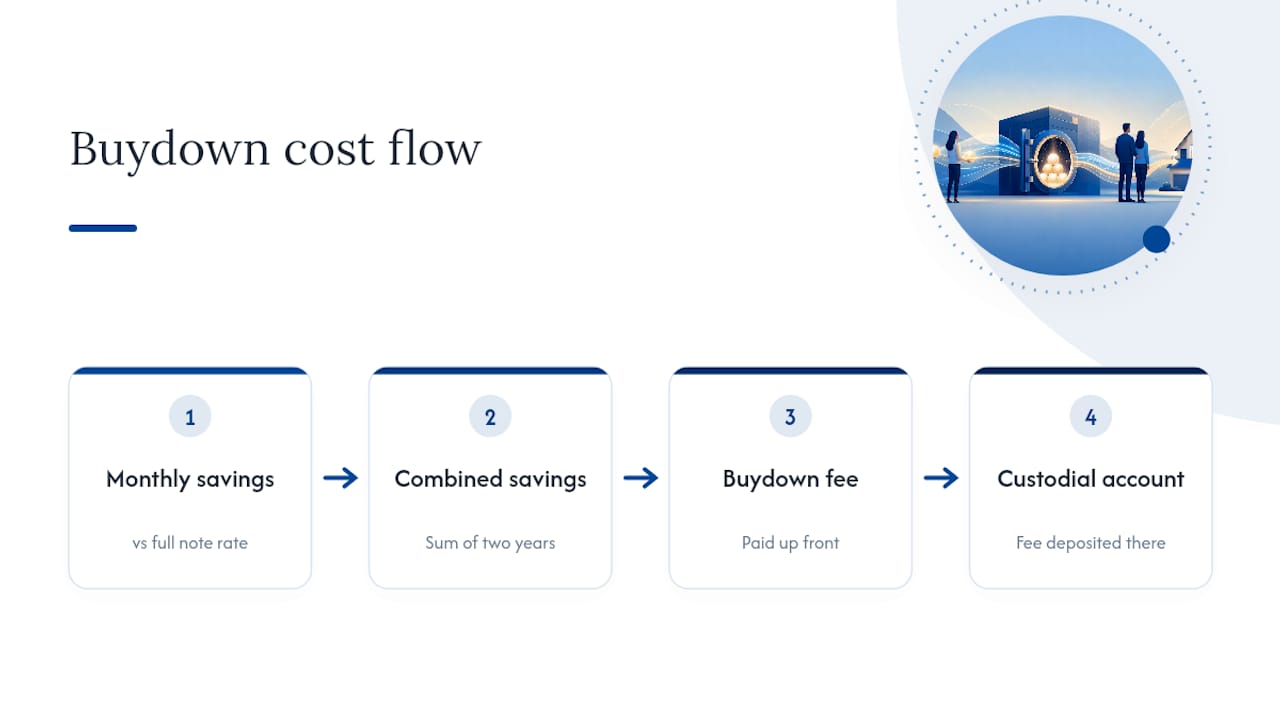
Run your own numbers with a mortgage calculator or ask your lender for an exact quote before assuming a figure.
What are the pros and cons of a 2-1 buydown?
The appeal is straightforward. Lower payments in years one and two ease cash flow right when moving costs, furniture, and repairs pile up. A buydown can also help marginal borrowers qualify more comfortably, and for sellers, it's often a better deal than slashing the listing price since it preserves comparable sale values in the neighborhood.
The risks deserve equal weight:
- Payment shock when year three arrives and the full note rate kicks in
- Sellers sometimes build the subsidy cost into a higher sale price, offsetting the buyer's savings elsewhere
- Not every loan program allows it, and investment properties are frequently excluded
Before committing, ask yourself two things: does your emergency fund cover a payment jump of $250 to $500 a month, and is your income trajectory realistic, not hopeful?
When does a 2-1 buydown mortgage make sense?
Run through this checklist before signing anything:
- You expect a raise, bonus, or new income stream within two years
- You need short-term breathing room for moving costs or renovations
- You plan to refinance or sell before the full note rate applies
- The seller or builder is funding the subsidy, not you
Red flags work the other way. If your budget barely survives at the year-one rate and has no cushion for year three, walk away from the buydown and negotiate a rate reduction or price cut instead. If your lender's program excludes your property type, the tool isn't available to you regardless of preference.
Consider two borrowers: one is a nurse expecting a licensure-based raise in 18 months, whose seller offered a buydown to move a stalled listing. That's an easy yes. Compare that to a buyer already stretching to afford the year-one payment with no savings buffer. For that borrower, a 2-1 buydown just delays a problem it can't solve.
Pro Tip: If you're unsure whether you'll clear underwriting at the full note rate, ask your loan officer to run both scenarios side by side before you fall in love with a house that only works at the discounted payment.
How do you negotiate a seller-paid buydown?
Start by asking the listing agent directly whether the seller will fund a buydown credit instead of a price reduction. Get the agreement in writing inside the purchase contract, not as a verbal promise.
Ask your lender these exact questions:
- Who is funding the buydown, and is it confirmed in escrow?
- How was the subsidy amount calculated?
- Is the fund refundable if I refinance or sell early?
- Am I qualified on the note rate or the discounted rate?
- Can you show me a full amortization schedule with and without the buydown?
Document everything in your lender disclosures before closing, not after.
An adviser's take on using buydowns wisely
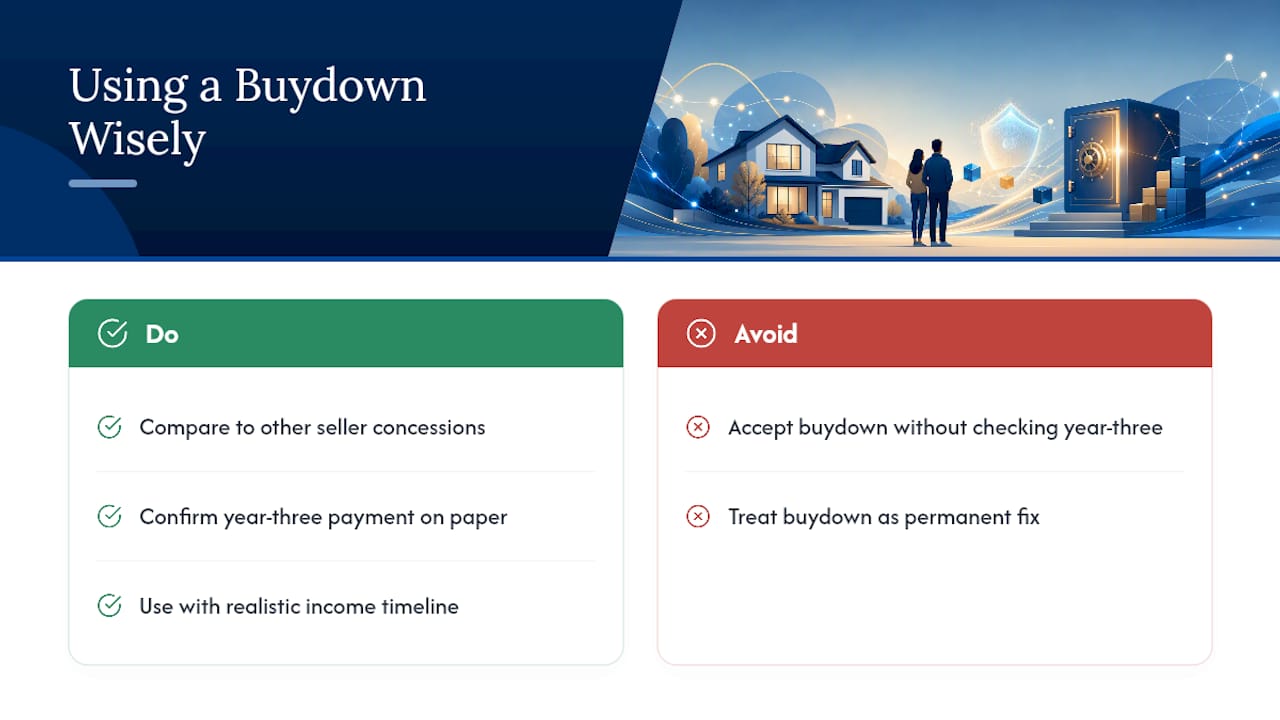
At Lending Bankers, we walk clients through whether a 2-1 buydown beats other seller concessions, like closing cost credits or straight price cuts, based on their actual cash flow and how long they plan to keep the loan. The biggest mistake we see is borrowers accepting a buydown without confirming they can handle the year-three payment on paper, not just in optimism about a future raise.
A buydown is a bridge, not a solution to an affordability problem that exists at the full note rate. Used correctly, alongside a realistic income timeline, it's one of the sharper tools in a buyer's negotiating kit.
— David
Get a Buydown Quote and Negotiation Support From Lending Bankers
Running the buydown math yourself is a good start, but confirming the exact fee, checking your loan program's eligibility, and negotiating seller-paid terms takes someone who does this daily. Lending Bankers serves buyers across Miami and Florida with personalized buydown quotes, program eligibility checks, and direct negotiation support when a seller or builder is on the table.

We'll run your numbers with and without a buydown using our mortgage calculator, compare it against other concessions like conventional versus non-conventional loan structures, and help you document the agreement properly before closing. If you're weighing a buydown against a straight rate negotiation or need help reading your loan estimate, contact Lending Bankers for a tailored quote before you sign anything.
Where to verify buydown rules and run your own numbers
Temporary Interest Rate Buydowns | Fannie Mae selling guide Mortgage financing options in a higher-interest-rate environment | CFPB What Is a 2-1 Buydown Loan and How Do They Work? | Investopedia Free mortgage calculators & tools | Texas Bank Statement Loans NMLS Consumer Access
This article is general information, not a substitute for advice from a qualified financial advisor. Consult a qualified financial professional about your own circumstances before acting on anything here.
Sources
- Temporary Interest Rate Buydowns | Fannie Mae selling guide
- Buying down interest rate: A guide for sellers | HomeLight
- What is a mortgage rate buydown? | Redfin